CINDERDEEP: Falling Sand Roguelike
A falling-sand roguelike where every pixel of the cave is simulated. Burn, freeze, dissolve and flood your way through five depths with a four-spell wand.
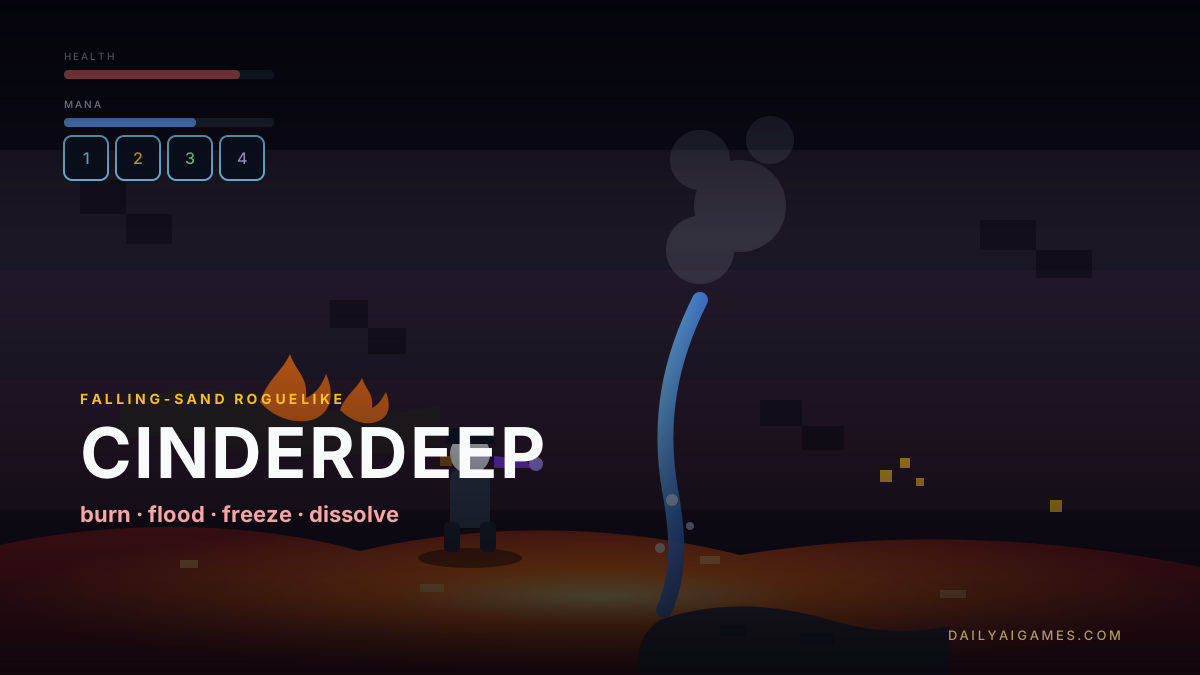
CINDERDEEP: Falling Sand Roguelike
Play on AIGameShareOpens aigameshare.com in a new tab · free · no download
752 plays tracked on Daily AI Games
External game siteCINDERDEEP: Falling Sand Roguelike is not hosted on Daily AI Games. The button above opens an independently operated, free browser game on AIGameShare; its content, availability and controls are controlled by that site.
How to Play
Desktop: A/D or arrows walk, W or Space jumps and then levitates while fuel lasts, S digs down through loose material, mouse aims, left click or J casts, 1-4 or the wheel cycles spells, E takes a gift or descends. Mobile: drag the D-pad to move, drag the aim pad to cast, tap a spell slot to select. Read the floor before you cast — wet stone plus Arc Lightning hits anything standing in it, and oil plus one Spark Bolt clears a room.
These are the controls for CINDERDEEP: Falling Sand Roguelike. The external CINDERDEEP: Falling Sand Roguelike version on AIGameShare may use slightly different controls.
Game Preview
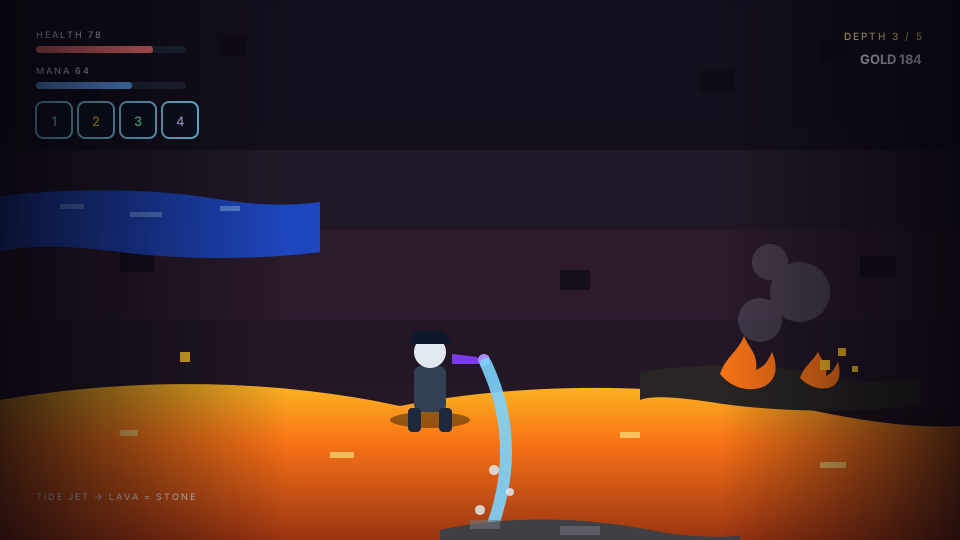
About CINDERDEEP: Falling Sand Roguelike
CINDERDEEP is a falling sand roguelike, which is a genre description worth unpacking. Every pixel of the cave around you is simulated material: wood burns, water puts fire out and turns to steam, oil floats on water and catches light, acid eats through stone, lava meeting water becomes rock, gunpowder and gas pockets chain-react, and any ceiling you undercut comes down on whatever is beneath it. You are an alchemist with a wand, descending through five depths — a collapsed mine, a fungal hollow, a frozen vault, a foundry and the Cinderdeep itself — and the cave is not scenery. It is the weapon.
Your wand holds four spells at a time, drawn from a pool of twenty, and every one of them is real matter rather than a visual effect. Tide Jet pours an actual stream of water: it extinguishes fire, cools lava into stone you can walk on, and can be used to build a bridge or a wall. Oil Spray soaks a room, Powder Trail lays a fuse, and a Spark Bolt lights either one. Arc Lightning runs through connected water and metal, which means it hits whatever is touching them — including you, if you are wading. Frost Lance freezes water into ice and enemies solid, turning a lake into a floor. Dissolve Ray melts a tunnel through almost anything when the route is wrong. Blast Keg brings ceilings down. Blink throws a marker and puts you where it lands, if there is room.
Structure comes from the vaults. Each depth ends in a brick vault with a healing font, a way down and a free gift chosen from three options: spells, wand modifiers or perks. Modifiers reshape the wand itself — Twin Cast, Rebound, Seeker, Flame Trail, Acid Trail, Quick Cast, Deep Well. Perks are passive and often run-defining: Asbestos Robe makes fire harmless but leaves lava lethal, Stone Skin reduces contact damage, Phoenix Ash refuses one death. Three of the five depths end in a boss arena, and the vault stays sealed until the boss falls. Die and the run restarts from the top, and your score — gold, depth, kills and bosses — goes to the leaderboard.
The opening minute teaches the whole game without a tutorial. You start with 100 health, 100 mana, Spark Bolt and Blast Keg. Mana refills on its own; levitation fuel refills when you stand on the ground. Gold is a real material that spills out of ore, so digging toward the glint and then walking over the spill is the whole early economy. Short hops of levitation are cheaper than one long one, and the healing font only works once, so passing it at full health is a mistake you make exactly one time.
Controls are familiar on desktop — A and D to walk, W or Space to jump then hold to levitate, mouse to aim, left click or J to cast, 1 to 4 or the mouse wheel to cycle spells — and thoughtfully rebuilt for touch, with a fixed D-pad on the left, a drag-to-aim pad on the right and tappable spell slots. CINDERDEEP was created by nilni and built with Claude Fable 5.2. At the time of writing it had 752 plays and 35 hours 27 minutes of tracked play on AIGameShare, and it was the number one trending game on the platform this week. For a game whose core mechanic is "what happens if I pour lava there", that is exactly the audience it deserves.
How This Game Was Generated
Created by nilni and built with Claude Fable 5.2. The game simulates the cave as falling-sand material rather than decoration, with reactions for fire, water, steam, oil, acid, lava, gunpowder, gas and collapsing ceilings. It ships 20 spells, a four-slot wand, five depths with vault gifts from three options, three bosses, wand modifiers and perks, persistent gold scoring and a leaderboard, English and Chinese UI, and a full touch layout. At the time of writing it had 752 plays and 35 hours 27 minutes of tracked play on AIGameShare, and it topped the platform's weekly trend list.
The Prompt Behind This Game
Show the prompt used to generate CINDERDEEP: Falling Sand Roguelike
Build a falling-sand alchemy roguelike in ONE self-contained HTML file (inline CSS/JS, Canvas 2D). No libraries, no image assets: every material is a pixel simulated by a cellular automaton, with a palette defined in code.

Simulation core:
- Fixed-resolution grid (for example 480x270 cells) upscaled to the canvas with nearest-neighbour, so pixels read as pixels.
- Update on a fixed 60Hz tick with two alternating scan directions to avoid directional bias. Never run simulation steps inside requestAnimationFrame with a variable delta.
- Materials: empty, stone, dirt, sand, gravel, wood, oil, water, lava, acid, gunpowder, gas, smoke, steam, ice, gold. Reactions must live in one data table, not in special-case code: water + lava -> stone + steam; water + fire -> steam; oil + fire -> burning oil; acid + stone -> acid + empty; gunpowder + fire -> explosion; ice + fire -> water; steam rises and condenses back to water after N ticks.
- Fire is a state on flammable cells with a lifetime, spread chance and smoke emission, not a separate global system.
- Conserve mass: a cell that moves leaves empty behind. Any reaction that deletes mass must be listed explicitly in a debug panel.
- Ceilings: when a supporting cell is removed, unsupported stone and dirt fall after a short settle delay with a dust puff. No floating islands.
Spells:
- Four-slot wand, each slot holding one of 20 spells. Every spell must inject material or apply a state to the grid; no spell may be a pure particle effect.
- Required 12: water jet, oil spray, powder trail, spark bolt, arc lightning (conducts through water and metal cells and can hit the caster), frost lance, dissolve ray, blast keg, blink, sandstorm, lava pour, shield bubble.
- Casting costs mana (100 max, about 8/s regen) with per-spell cooldowns. Hold-to-stream for jet spells at a reduced rate.
Run structure:
- Five depths of increasing material complexity: a mine (sand, wood, water), a hollow (gas, acid, spreading fungus), a vault (ice), a foundry (lava, metal) and the Cinderdeep (all of it).
- Each depth ends in a vault with a healing font that works once, a descent tile and a three-choice gift: spell, wand modifier or perk.
- Boss arenas on depths 2, 4 and 5, each with at least one material-based weak point. A boss that can only be killed by raw DPS is a failed design.
- Score = gold collected + depth x 100 + kills x 10 + bosses x 250. Persist the best score locally.
Controls and platform:
- Desktop: A/D move, W or Space jump then hold to levitate on a fuel bar, S digs down, mouse aims, click casts, 1-4 select spells, E interacts, P pauses.
- Mobile: fixed D-pad, a drag-to-aim-and-cast pad, tappable spell slots, and safe-area padding.
- Bilingual English and Chinese string table, switchable from the pause menu.
Performance and testing:
- Target 60fps on a mid-range phone at 480x270 cells. Use typed arrays (Uint8Array) for the grid, avoid per-cell allocation and redraw only dirty regions.
- Write a headless harness that runs 10,000 ticks and reports: mass created and destroyed per material, cells updated per tick, and any material that ends up NaN or permanently stuck.
- Run 30 random-input runs and report average depth reached, deaths caused by the player's own spell, and rooms where all reachable gold was exhausted.
Deliver in stages: grid and falling sand first, then the reaction table, then the wand, then depth generation, then vaults and bosses. Print the reaction table and the mass-conservation report at the end.
Open in the prompt library for tips and variations
Similar AI Games
 Action Games
▶ 294 plays
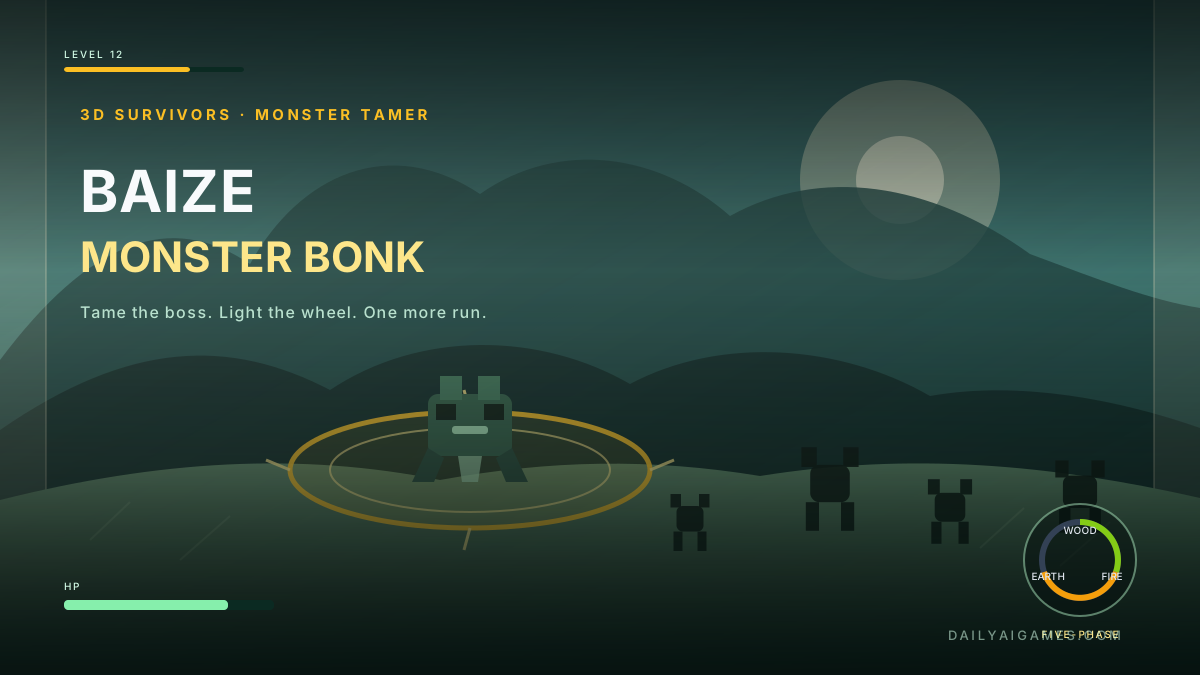
Baize Monster Bonk
A 3D survivors roguelite drawn from the Classic of Mountains and Seas — auto-attacking beasts, seal-ring taming and a five-element wheel that chains elements.
Play now
 Action Games
▶ 137 plays
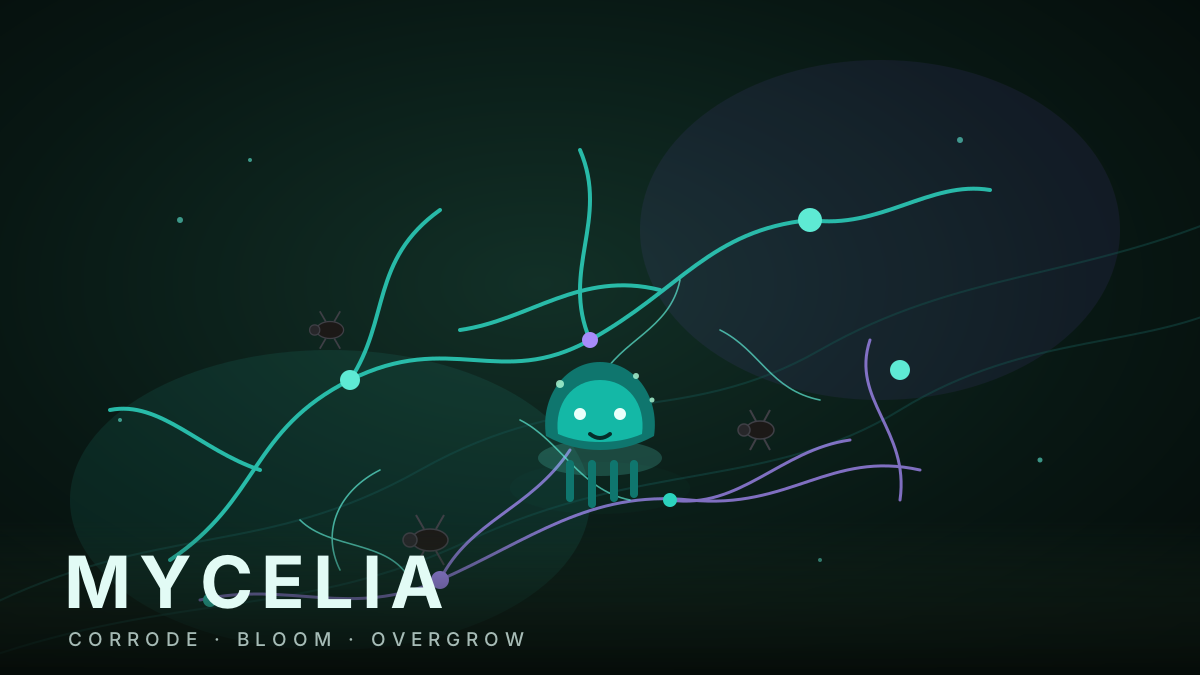
MYCELIA
A 3D survivors-like where the only verb is walking. Every step grows a glowing fungal carpet that corrodes bugs, and the whole web can be detonated in one chain bloom.
Play now
 Action Games
▶ 1,303 plays
Driftwake
A 3D naval roguelite where your cannons only fire fore, aft and broadside — turn the hull to aim, dodge with an exploding wake, and fight eight warship bosses.
Play now
 Action Games
▶ 504 plays
Glow Squad
A cartoon auto-survivor where you only move and dash. Bolts, satellites and random ultimates fight for you, and wounded bosses heal and grow stronger every 15 seconds.
Play now
Articles About CINDERDEEP: Falling Sand Roguelike
Nov 12, 2026
CINDERDEEP: The Falling-Sand Roguelike Where the Cave Is Your Weapon
CINDERDEEP simulates every pixel of its caves — water, oil, lava, acid, gunpowder — and gives you a four-spell wand. Here is why it is the week's most-played AI game.
Oct 19, 2026
AI-Generated Browser Games Worth Knowing: October–November 2026
From a 12-hour sports hit and a weekend MMO to fifteen new browser games — a tin-toy kart racer, a spherical sailing sim, an art-print surf run and more.
Oct 15, 2026
The 10 Best AI Games to Play Online Free
Ten AI-generated games you can play online free right now — arcade, puzzle, strategy and endless runners, all built from text prompts and playable in your browser.
