Chirp Pong
A two-phone Pong game where the ball travels between screens as sound. No Wi-Fi, no Bluetooth, no accounts — just two phones, top to top.
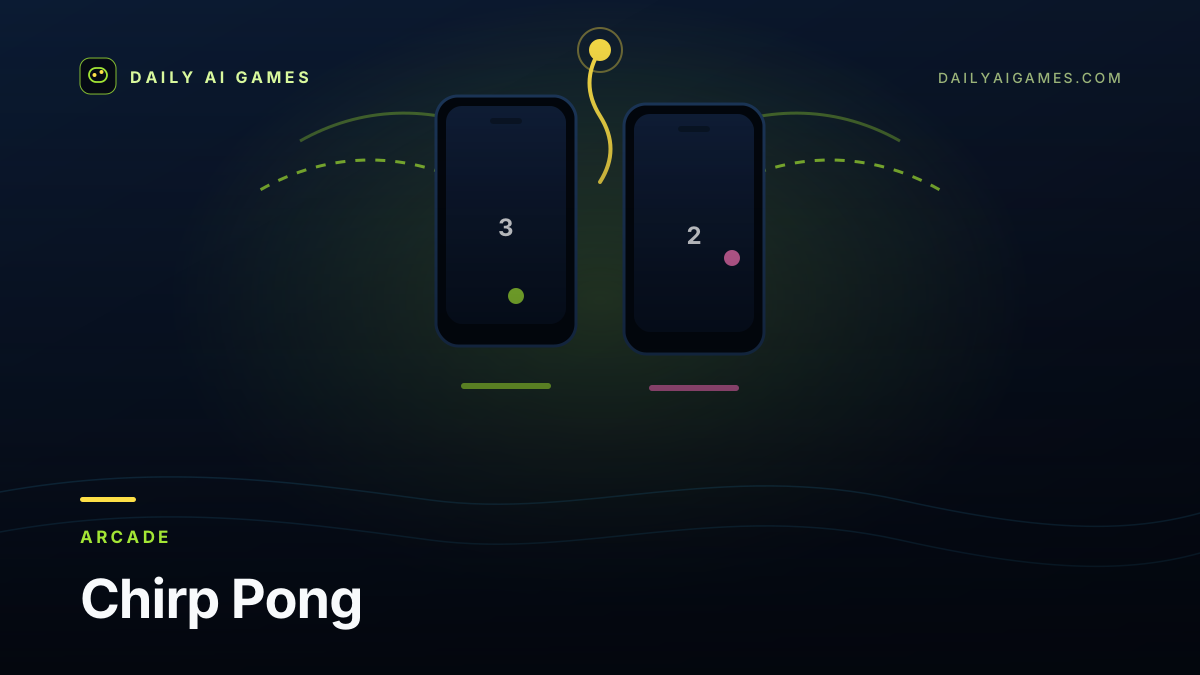
Chirp Pong
Play on Simon Willison ToolsOpens tools.simonwillison.net in a new tab · free · no download
281 plays tracked on Daily AI Games
External game siteChirp Pong is not hosted on Daily AI Games. The button above opens an independently operated, free browser game on Simon Willison Tools; its content, availability and controls are controlled by that site.
How to Play
Open the page on two phones, turn the volume up, disable silent mode and lay the phones top-to-top a few centimetres apart. Tap “Play on two phones” on both, then tap Call on one device. Drag anywhere to move your paddle, hit with the paddle edge to angle the shot, swipe sideways to add spin, and flick up to smash. Tap the opponent’s court when your bomb meter is full. Practice mode plays against a CPU if you only have one phone.
These are the controls for Chirp Pong. The external Chirp Pong version on Simon Willison Tools may use slightly different controls.
Game Preview
About Chirp Pong
Chirp Pong is a two-player paddle game with a trick that sounds like a magic trick: the ball travels between the two phones as sound. Open the page on both devices, lay them top-to-top on a table, tap Call on one, and the other answers with a chirp. From that moment the phones are paired over their speakers and microphones, with no Wi-Fi, no Bluetooth, no server and no accounts. When you hit the ball through the portal at the top of your screen, your phone chirps it across and it bursts out of the top of your partner’s screen. You hear it go.
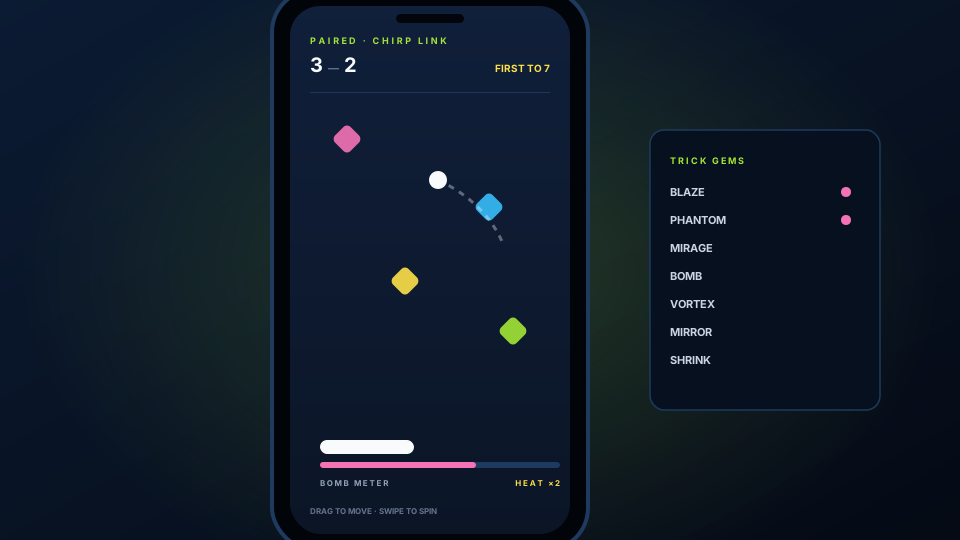
The design turns the constraint into the fun. Each phone is half the court, and the top edge is a portal rather than a wall. You drag anywhere to move your paddle, hit with the edge to angle your shot, swipe sideways as you connect to add spin that keeps curving on the other screen, and flick upward to smash. Trick gems scattered on the court load an effect that fires on your opponent’s side: a speed boost, invisibility through the middle, a mirage that splits the ball in three, a bomb that stuns the paddle, a vortex that bends the path, mirrored controls, or a paddle shrunk to half size. Long rallies heat the court, so six or more hits makes a point worth double and twelve or more makes it worth triple. Every return also charges a bomb meter that you spend by tapping the opponent’s court.
It is the work of Simon Willison, published on 15 October 2026 and built with Claude Opus 5.5 Extra in Claude Code as another experiment in static HTML that costs nothing to host. The project includes a practice mode against a CPU, selectable matches to 7, 11 or 15 points, and a pairing flow that tells you exactly what to do: volume up, silent mode off, phones a few centimetres apart. The audio modem is the genuinely clever part — a small FSK-style chirp protocol with a handshake and acknowledgement, so a dropped packet does not quietly desynchronise the match.
Chirp Pong is not a replacement for real netcode, and it does not pretend to be. It needs two phones, a reasonably quiet room and working speakers and microphones, and it will not survive a noisy café. What it demonstrates is more useful than a tech demo: a browser can use local hardware in a way a native app rarely bothers to, and a game can make that constraint feel like the whole point. If you have a second phone and five minutes, this is the most surprising free browser game of the month.
How This Game Was Generated
Built by Simon Willison and published on 15 October 2026 with Claude Opus 5.5 Extra in Claude Code. The game is a static HTML experiment: two phones pair and exchange the ball over an audio modem using their speaker and microphone, with no network connection involved. A CPU practice mode is included for single-device testing.
The Prompt Behind This Game
Show the prompt used to generate Chirp Pong
You are a senior HTML5 game developer and an audio engineer. Build a two-device paddle game as ONE self-contained HTML file (inline CSS/JS, no libraries, no external assets, no network requests at runtime).

Transport requirement — the hard part:
- The two phones must pair and exchange the ball using ONLY their speaker and microphone. No Wi-Fi, Bluetooth, accounts or server.
- Implement a simple FSK audio modem: a short handshake (call/answer) followed by tiny encoded packets for ball launch, paddle position and hit events.
- Use the Web Audio API with an AudioContext at 48kHz, a band-limited chirp around 2-4kHz, and a matched filter or Goertzel detector on the receiving side.
- Add automatic gain control, echo suppression and a retry/ack loop so a dropped packet never desyncs the match.
- Show a visible pairing state: idle, calling, listening, paired, and a clear retry path if pairing fails within 15 seconds.
- Include a practice mode against a CPU so a single player can test the game without a second phone.
Gameplay:
- Each phone is half the court; the top edge is a portal the ball flies through.
- Drag anywhere to move the paddle; hitting with the paddle edge changes the angle; a sideways swipe adds spin that keeps curving on the other screen; flick up for a smash.
- Trick gems on the court load one effect that fires on the opponent screen: speed boost, invisibility, mirage split, bomb, vortex, mirrored controls, shrunken paddle.
- Heat system: 6+ hits makes the point worth x2, 12+ hits x3. A bomb meter charges on every return and is spent by tapping the opponent’s court.
- First to 7, 11 or 15 points, selectable on the start screen. Loser serves. Pause on blur.
Performance and robustness:
- 60fps game loop with delta time, responsive letterboxed canvas, touch-first input with 44px minimum targets.
- Degrade gracefully: if the microphone is unavailable or permission is denied, keep practice mode fully playable and explain why.
- No text or links that navigate away, no audio files, all sound synthesized.
After the code, print the packet format (field, bits, meaning) and a 5-step manual test plan for two real phones.
Open in the prompt library for tips and variations
Similar AI Games
 Arcade Games
▶ 548 plays
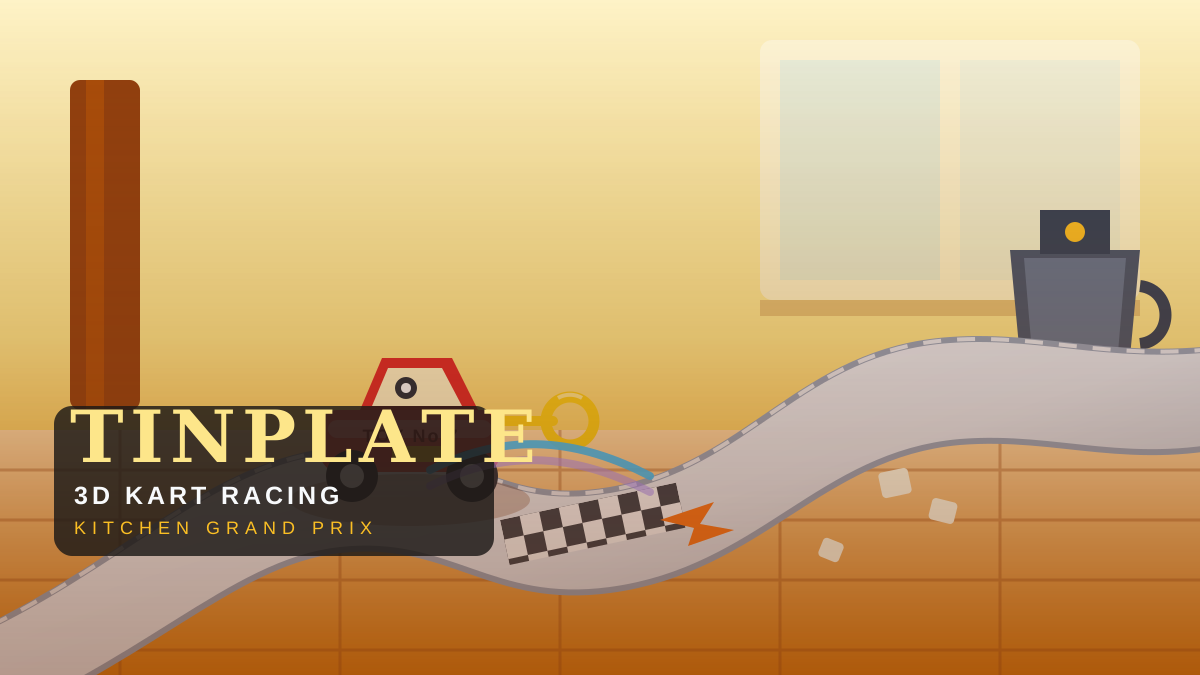
TINPLATE 3D Kart Racing: Kitchen Grand Prix
A 3D kart racer on a giant mid-century kitchen floor. Six wind-up tin toys drift to wind their clockwork keys, fire sugar-cube items and race a four-round Kitchen Cup.
Play now
 Arcade Games
▶ 201 plays
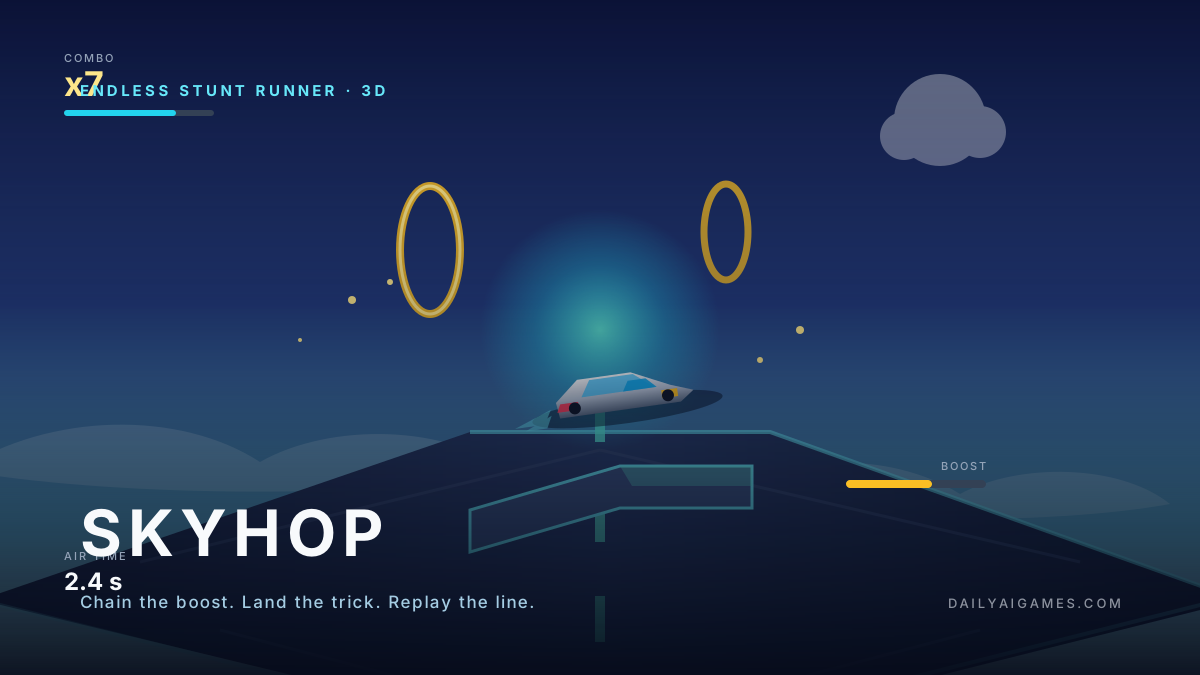
SKYHOP
A 3D flying-car stunt game on an endless sky strip — chain boosts, clear gaps, land tricks in slow motion and replay the line you took, all in one browser tab.
Play now
 Arcade Games
▶ 100 plays
GREAT WAVE: Surf The Great Wave off Kanagawa
An eight-oared surf run through Hokusai's Great Wave: read the spray for score, row to outrun the collapsing foam and chase eight waves toward Mount Fuji.
Play now
 Arcade Games
▶ 567 plays
Turbo Kartz
A cartoon kart racer for one to four players, with split screen, real gamepads, TV remote support and four tracks — all in a browser tab.
Play now
Articles About Chirp Pong
Oct 24, 2026
Chirp Pong: Two Phones, One Ball, and a Network Made of Sound
Chirp Pong pairs two phones over their speakers and microphones — no Wi-Fi, no Bluetooth. Here is how the sound modem works and what builders can copy.
Oct 19, 2026
AI-Generated Browser Games Worth Knowing: October–November 2026
From a 12-hour sports hit and a weekend MMO to fifteen new browser games — a tin-toy kart racer, a spherical sailing sim, an art-print surf run and more.
Oct 15, 2026
The 10 Best AI Games to Play Online Free
Ten AI-generated games you can play online free right now — arcade, puzzle, strategy and endless runners, all built from text prompts and playable in your browser.
