1 in 8 Billion
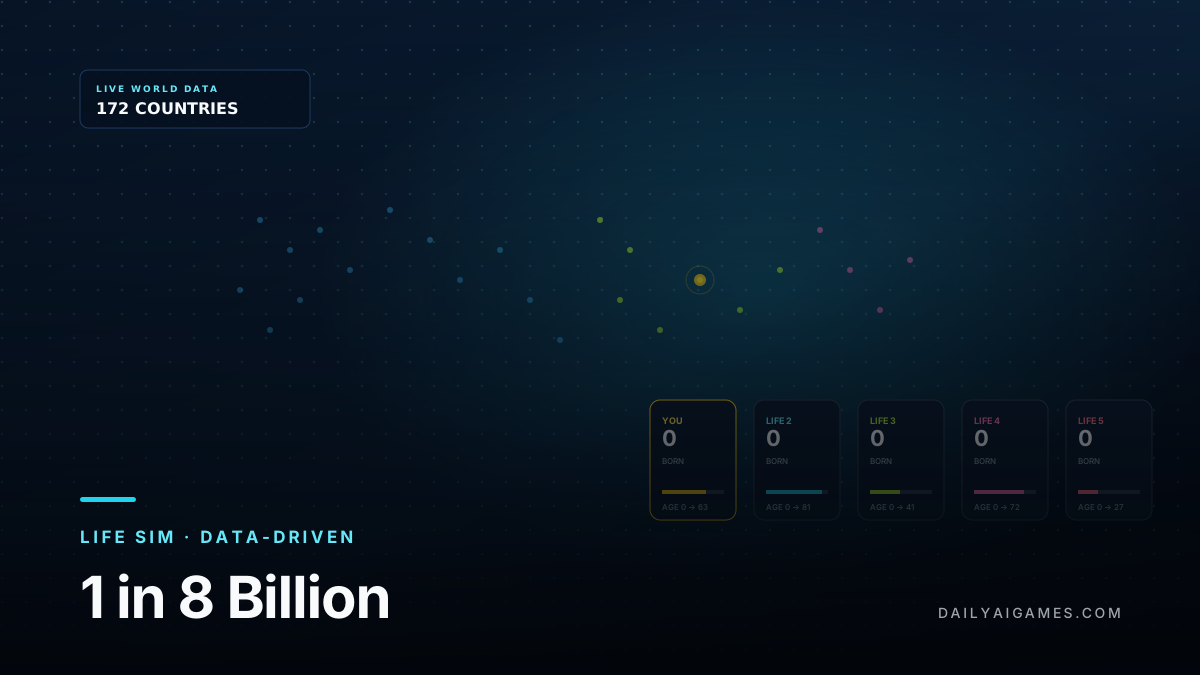
A free browser life sim that births you into a random country and plays your whole life out using real UN, WHO and World Bank statistics — built with Claude in about four hours.
164 plays tracked on Daily AI Games
External game site1 in 8 Billion is not hosted on Daily AI Games. The button above opens an independently operated, free browser game on Official site; its content, availability and controls are controlled by that site.
How to Play
Open the official site and choose a birth year, how the country is drawn (by births or by population), and how long a life should take (about 30, 60 or 90 minutes). Press Be born. At each yearly pause, pick a focus; when a decision appears, choose an option. Time can be paused or sped up, and Auto mode in the top menu (the ⋯ menu on phones) plays a life without input. The English site includes a country statistics browser for all 172 countries.
These are the controls for 1 in 8 Billion. The external 1 in 8 Billion version on Official site may use slightly different controls.
Game Preview
About 1 in 8 Billion
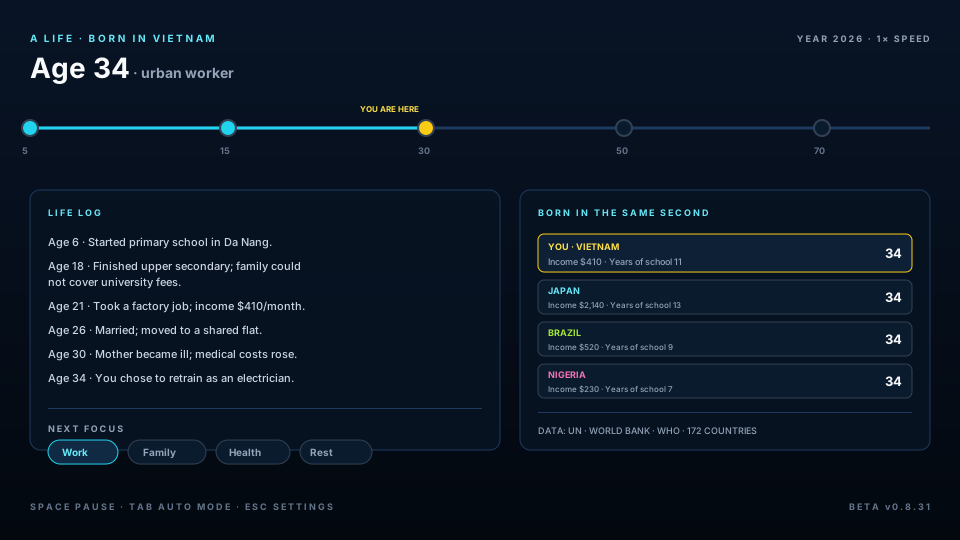
1 in 8 Billion is a free browser life simulation built around a single, uncomfortable idea: you do not choose where you are born. There is no character creator. The game picks a country weighted by real birth numbers, gives you a family and an economic starting point from that country’s statistics, and then runs your life from age zero to death. Four other babies born in the same second are simulated alongside you, so the screen always shows the comparison that the premise is making. Where you start is luck; what happens next is a mix of choices and the odds of the place you landed in.
The data is the game. For 172 countries the simulation uses births, life expectancy by sex, infant and under-five mortality, GDP per person at purchasing-power parity, income inequality, years of schooling, university enrollment, agricultural employment, fertility, maternal mortality, HIV, homicide rates, smoking, out-of-pocket health costs, child marriage and life satisfaction. Causes of death follow WHO regional and age patterns. The game is explicit that it is a beta, that the numbers are public statistics rather than predictions, and that they describe populations rather than individuals. You can play today’s world, a past year, or a projected future, and compare your simulated life with the country you were actually born in.
A life takes roughly 30 to 90 minutes, depending on the country’s life expectancy and the speed you choose. At ages 5, 15, 30, 50 and 70 the clock stops and asks you to think about the person you are playing and your own life. Between those pauses you choose a focus for the year and make decisions about school, work, love, moving abroad and medical care. Those choices matter, but the game is honest that they cannot fully escape the statistics of your birthplace. An Auto mode lets you watch a life without deciding anything.
The build story is almost as striking as the subject. Independent developer Jin Hwi-eus, who posts as Jin’s Earth, released the game on 5 October 2026 and says the whole project took about four hours from idea to launch, using generative AI — the official site credits Claude — to build a life simulation grounded in statistical data. It is deliberately plain: no 3D, no leaderboard, no account. The emotional response did the marketing instead. Within ten days players on Threads, X and Japanese social media were posting about crying when their simulated person died and arguing about what happiness means when so much of a life is assigned at birth.
The game is rated 15+ and handles death, illness, violence, addiction and suicide at real-world rates, without showing scenes and with pointers to help. That restraint is part of the design: the point is not shock, it is scale. 1 in 8 Billion is a rare case where a four-hour AI build produced something people describe as meaningful rather than merely impressive, and the reason is that the content was already in the data.
How This Game Was Generated
Made by independent developer Jin Hwi-eus (Jin’s Earth), released 5 October 2026. The developer says the project took about four hours from concept to launch and was built with generative AI; the official site credits Claude. Statistics come from the UN, World Bank, WHO and other public sources covering 172 countries. The game is in beta (v0.8.31 at the time of writing) and explicitly says the numbers describe populations, not individuals.
The Prompt Behind This Game
Show the prompt used to generate 1 in 8 Billion
Build a free browser life simulation in which the player is born into a random country and lives from age 0 to death. Single-page web app, TypeScript preferred, no 3D, no accounts, no runtime LLM calls.

Data model:
- A JSON dataset for at least 100 countries. Per country: annual births, life expectancy by sex, infant and under-5 mortality, GDP per capita (PPP), Gini coefficient, mean years of schooling, university enrolment, agricultural employment, fertility rate, maternal mortality, HIV prevalence, homicide rate, smoking rate, out-of-pocket health spending, child marriage rate and life satisfaction. Cite the source and vintage for every field.
- Make the country draw weighted by annual births by default, with a toggle for population weighting. Make the data year selectable, including one historical year and one UN projection.
- Simulate a life table by sex and country for the age of death. Sample causes of death from WHO regional patterns by age band; never invent precise individual predictions.
Game loop:
- Five lifecycle stages. At ages 5, 15, 30, 50 and 70, pause and show a reflection prompt about the simulated person and the player.
- Each year, the player picks a focus: school, work, family, health, migration or rest. Decisions about education, marriage, moving abroad and medical care appear at plausible ages.
- Choices shift probabilities, but do not erase the starting country’s baseline. Show the trade-off explicitly rather than pretending agency is unlimited.
- Simulate four other babies born in the same second as a comparison cohort, with their outcomes visible beside the player’s life.
- Auto mode plays a full life with no input. A full run should take 30-90 minutes at normal speed.
Safety and tone:
- Rate 15+. Death, violence, addiction and suicide occur at real statistical rates; never show a method and always surface a help link in the relevant region. Add a “leave out frightening scenes” toggle that preserves the statistics without graphic text.
- No score, no leaderboard, no “good ending”. The point is comparison, not winning.
UX:
- Mobile-first, high contrast, readable at 360px. Save the current life and the country the player was actually born in locally only. Export a share card with the life summary, no personal data.
Testing:
- Run 10,000 simulated lives headlessly and report the distribution of ages at death by country against the source life expectancy. Flag any country whose simulated mean is off by more than 2 years.
- Print the data sources, known gaps and the exact assumptions used to convert country statistics into individual life events.
Open in the prompt library for tips and variations
Similar AI Games
 Simulation Games
▶ 540 plays
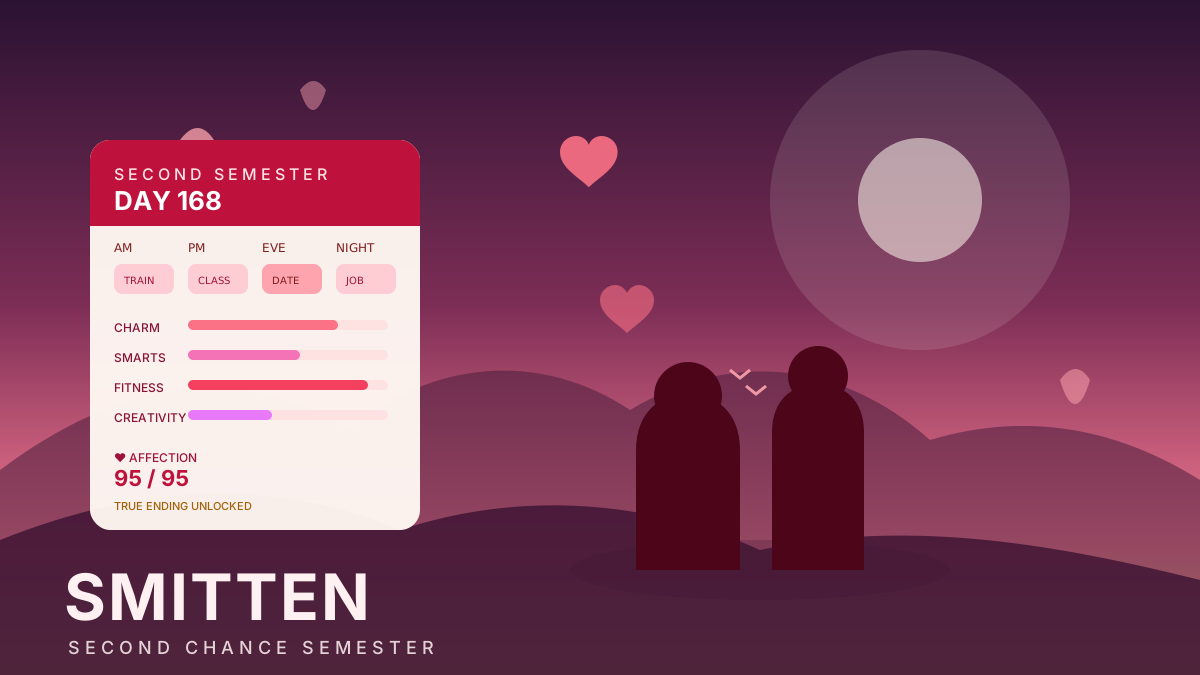
SMITTEN — Second Chance Semester
A 168-day stat-raising dating sim with six routes, 19 endings and a memory quiz every time you forget what she told you. Full English and Chinese.
Play now
 Casual Games
▶ 476 plays
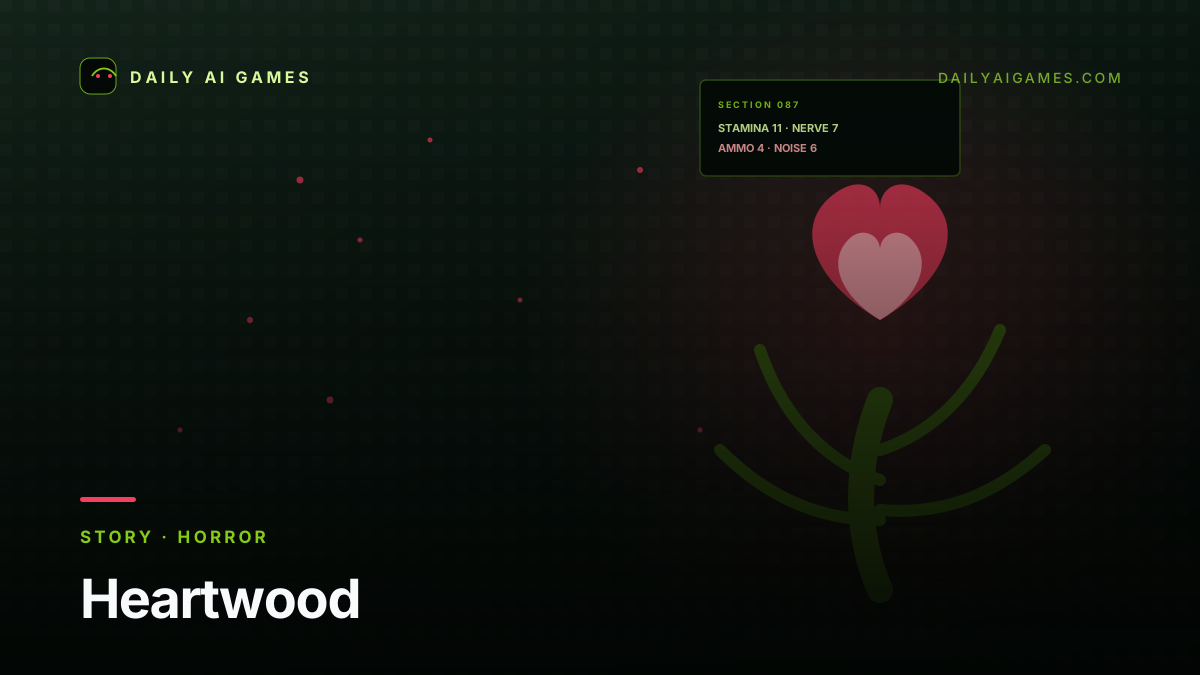
Heartwood
A sci-fi horror gamebook with 269 numbered sections, seven endings and a squad that remembers how you treated them — built with AI and tested by 5,000 simulated runs.
Play now
 Simulation Games
▶ 467 plays
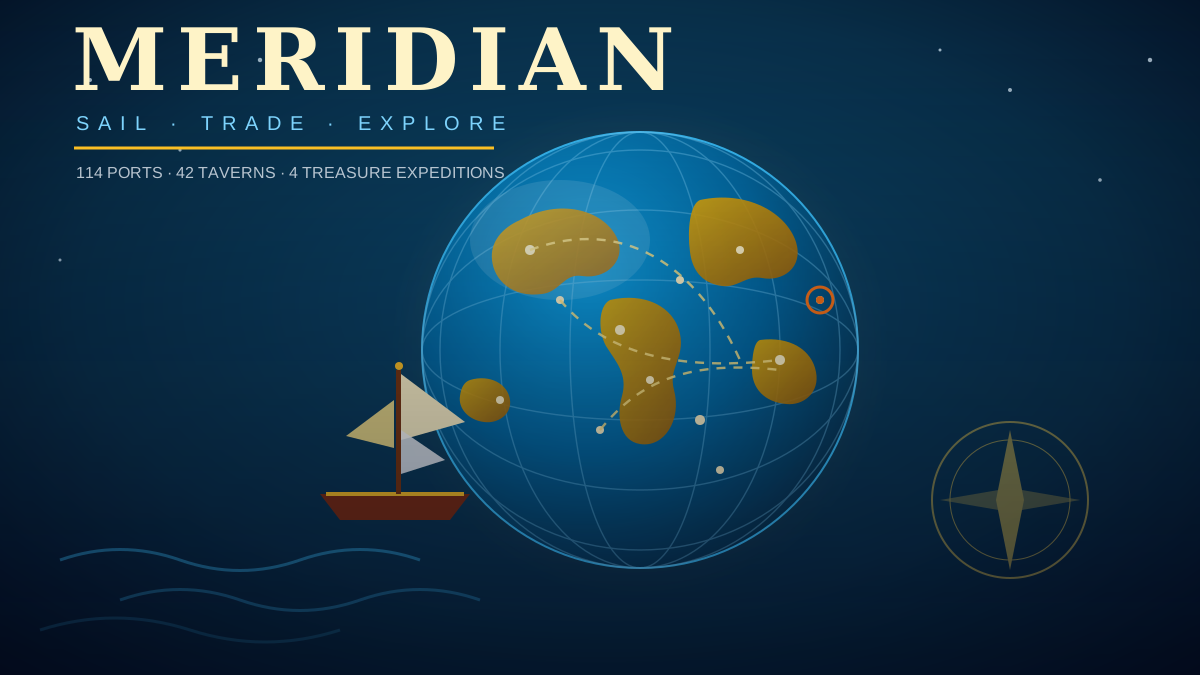
MERIDIAN
A 3D sailing and trading adventure on a spherical Earth with 114 ports, 42 illustrated taverns and four treasure expeditions you follow from clue to coastline.
Play now
 Simulation Games
▶ 34 plays
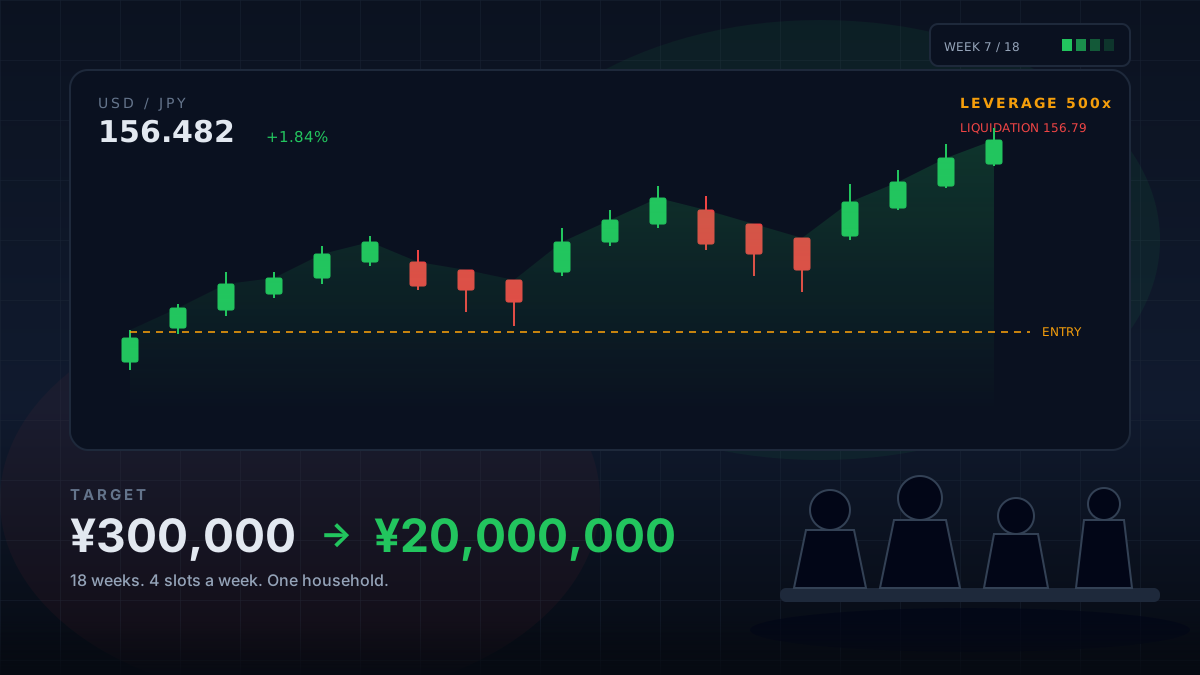
Honest Money Is Boring, Right?
An 18-week USD/JPY trading sim with 500x leverage, four time slots a week and a family who remembers every loss — multiple endings included.
Play now
Articles About 1 in 8 Billion
Oct 25, 2026
1 in 8 Billion: A Four-Hour AI Life Sim That Made Players Cry
1 in 8 Billion births you into a random country and plays your whole life using UN, WHO and World Bank data. We break down the four-hour Claude build and its design.
Oct 19, 2026
AI-Generated Browser Games Worth Knowing: October–November 2026
From a 12-hour sports hit and a weekend MMO to fifteen new browser games — a tin-toy kart racer, a spherical sailing sim, an art-print surf run and more.
Sep 28, 2026
What Are AI Generated Games? A Plain-English Guide
AI generated games are playable games built by AI models from text prompts. Here is what they are, how they are made, and where to play them free.
