Heartwood
A sci-fi horror gamebook with 269 numbered sections, seven endings and a squad that remembers how you treated them — built with AI and tested by 5,000 simulated runs.
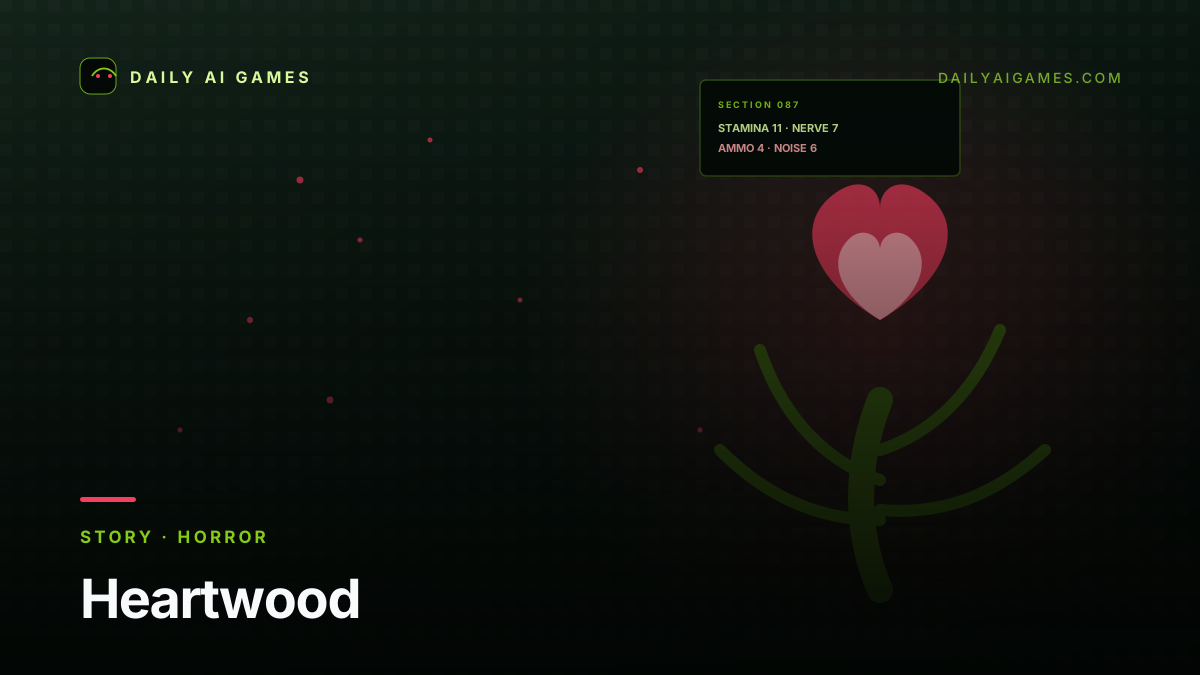
476 plays tracked on Daily AI Games
External game siteHeartwood is not hosted on Daily AI Games. The button above opens an independently operated, free browser game on itch.io; its content, availability and controls are controlled by that site.
How to Play
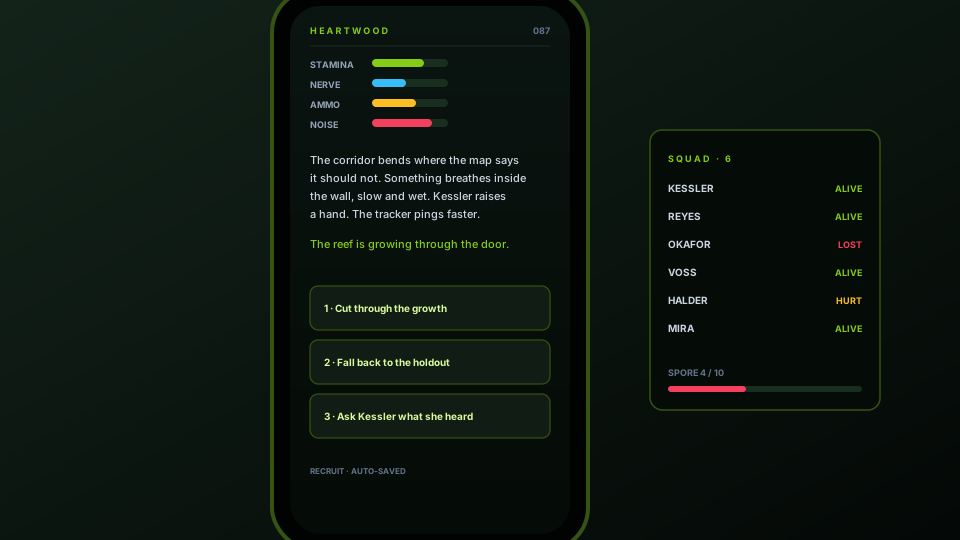
Play on a phone in portrait, ideally with headphones. Tap choices to move between numbered sections, roll dice when the text asks, and track STAMINA, NERVE, AMMO and NOISE. Space defends, X opens the menu, arrow keys and Enter work on desktop. Choose a background (combat medic, ex-miner or sniper) and a difficulty: Recruit lets you rewind one death, Ironman deletes the save. Progress saves automatically in the browser.
These are the controls for Heartwood. The external Heartwood version on itch.io may use slightly different controls.
Game Preview
About Heartwood
Heartwood is a sci-fi horror gamebook that plays like the Fighting Fantasy books you may remember, with a few things paper could never do. Hollow Reach has been silent for nineteen days. Two hundred and twelve colonists are down there under a terraforming colony on a tidally locked moon, and your private military squad has been sent to bring them home. The colony is not dead. Something down there is perfectly healthy, and it is growing out of the people you came to rescue.
The structure is classic and generous: four acts called Descent, The Reef, Holdout and The Heartwood, 269 numbered sections, dice rolls, codewords that carry choices across acts, and seven endings including Rooted, which is what happens when the SPORE meter reaches ten. A full run takes about half an hour and shows roughly a third of each act, so the endings gallery is there to show you the roads you did not take. You manage STAMINA, NERVE, AMMO and NOISE; every shot is heard, and noise attracts things. Six squadmates each have a skill, any of them can die, and who is still alive changes which text you see and which choices can succeed. The Holdout act is a siege on a real clock: three waves, doors to barricade, and squadmates to post where you think they will survive.
The presentation is unusually coherent for a browser game. All art is pixel art limited to the Mega Drive’s 16-colour palette, generated with Codex’s image tool and then reduced by a script so the constraint is real. Every sound is synthesised in the browser — the colony’s machinery, the wind, a tracker that pings faster as something closes in, and breathing inside the walls. It is designed to be played on a phone, in portrait, with headphones and the lights off. Progress saves in the browser after every section, the game installs as a PWA, and it is available in English and Brazilian Portuguese.
Heartwood was designed and directed by liminalghostvoid, who wrote and coded it with Claude Code, and it shipped as a first public release on 22 October 2026. The quality process is the part other builders should steal: a checker plays 5,000 random games after every story change and reports dead ends, unfair deaths and lines spoken by squadmates who are already dead, then AI playtesters run full games in different styles to catch continuity errors that random play cannot. For a branching narrative of this size, that combination is more valuable than any single generation pass.
How This Game Was Generated
Designed and directed by liminalghostvoid, who wrote and coded the game with Claude Code. The pixel art was generated with Codex’s image tool and reduced by a script to the Mega Drive’s 16-colour palette. Every sound is synthesised in the browser. A checker plays 5,000 random runs after each story change, and AI playtesters play full games in different styles. Released 22 October 2026 in English and Brazilian Portuguese.
The Prompt Behind This Game
Show the prompt used to generate Heartwood
You are building a sci-fi horror gamebook in the tradition of Fighting Fantasy, as ONE self-contained HTML file (inline CSS/JS, no libraries, no external assets).

Content structure:
- Four acts and at least 200 numbered sections. Store them as data, not prose in code: each section has an id, act, text, choices, requirements (items, codewords, squad alive) and effects (stat changes, flags, deaths, ending id).
- Six squadmates with one skill each. Any of them can die; who is alive must change what text is available and what choices succeed.
- Four stats: STAMINA, NERVE, AMMO and NOISE. Every shot raises NOISE. A separate SPORE meter climbs in the reef act; at 10 the player is Rooted — a valid ending, not a bug.
- Dice checks written as "roll 2d6 + stat >= target", with success and failure sections defined for every check.
- Seven endings, including the Rooted ending, plus a siege sequence where the player barricades doors and posts squadmates during three timed waves.
- Codewords carry choices forward across acts; no choice should ever lead to a section that contradicts an earlier death.
Presentation:
- 16-colour pixel-art look, all art drawn in inline SVG or CSS — no image files. Keep the palette to exactly 16 colours.
- Synthesize every sound with the Web Audio API: machinery, wind, a tracker ping that speeds up as danger closes, breathing in the walls. No audio files.
- Mobile-first portrait layout, large tap targets, save progress to localStorage after every section, plus an endings gallery showing the routes not taken.
- Let the player pick a background (medic, ex-miner, sniper) and a difficulty: Recruit allows rewinding one death, Ironman deletes the save.
Testing requirement (do this after the game):
- Build a headless simulation that plays 5,000 random runs and reports: unreachable sections, dead ends with no valid choice, deaths with no warning, sections spoken by squadmates who are already dead, and endings that can never be reached.
- Then list every issue found and fix them in the file before you finish.
After the code, print the section graph summary (acts, sections per act, endings) and the test report.
Open in the prompt library for tips and variations
Similar AI Games
 Simulation Games
▶ 540 plays
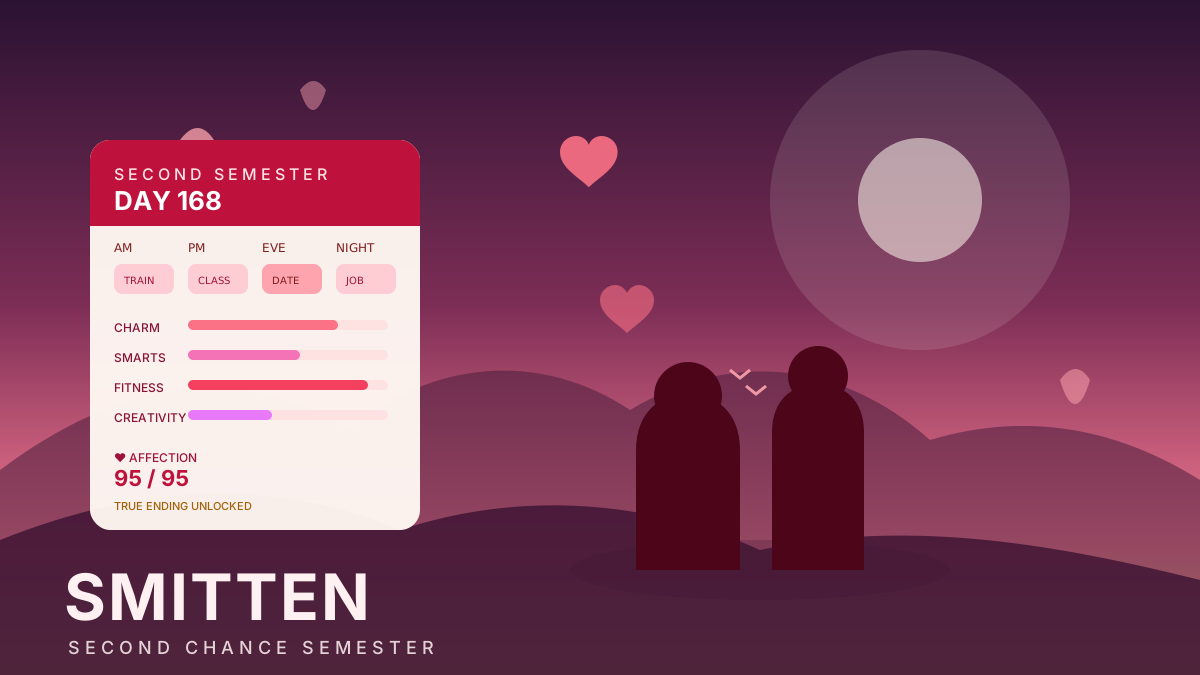
SMITTEN — Second Chance Semester
A 168-day stat-raising dating sim with six routes, 19 endings and a memory quiz every time you forget what she told you. Full English and Chinese.
Play now
 Casual Games
▶ 605 plays
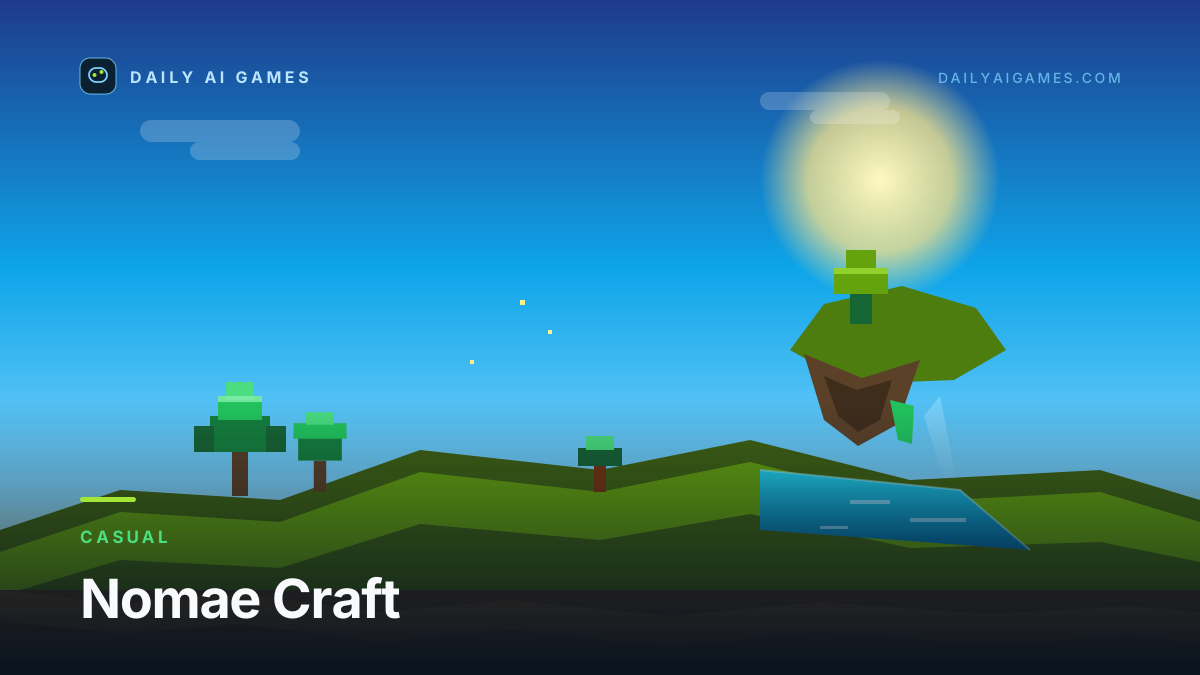
Nomae Craft
A browser voxel sandbox with one shared persistent world: 14 biomes, survival, crafting, mobs and floating sky islands, all generated in code.
Play now
 Strategy Games
▶ 591 plays
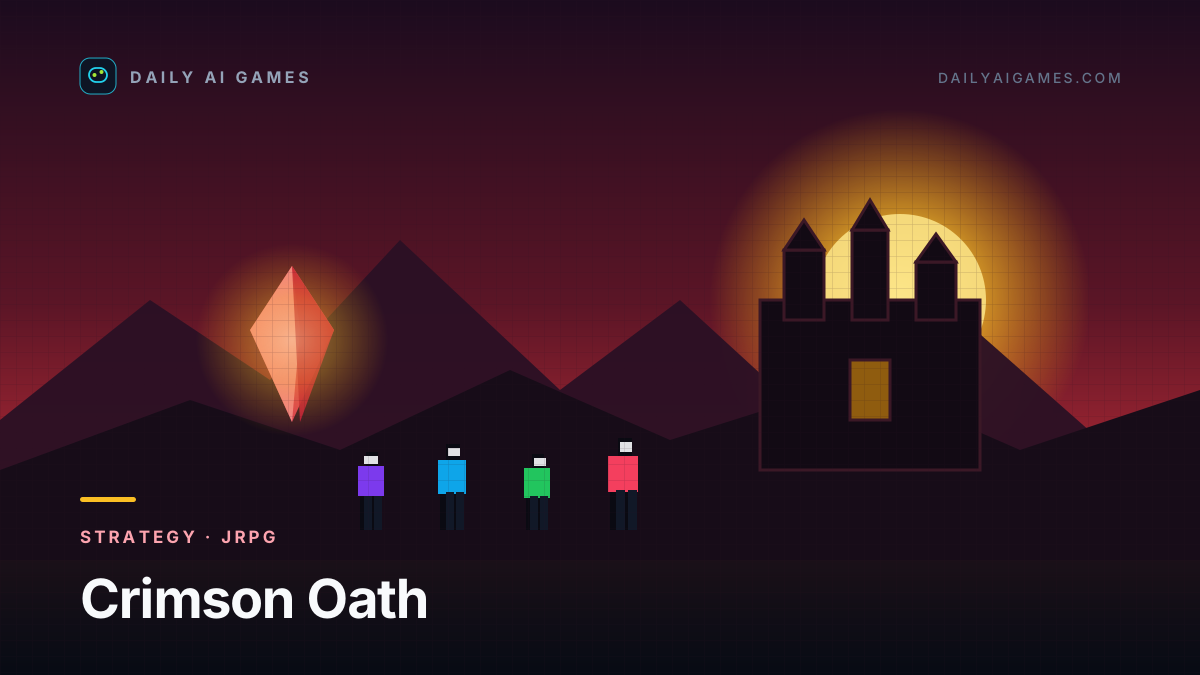
Crimson Oath
A free SNES-style JRPG with two chapters, four heroes and FF6-style ATB battles. Every sprite and song is generated in code, and it runs in your browser.
Play now
 Casual Games
▶ 512 plays
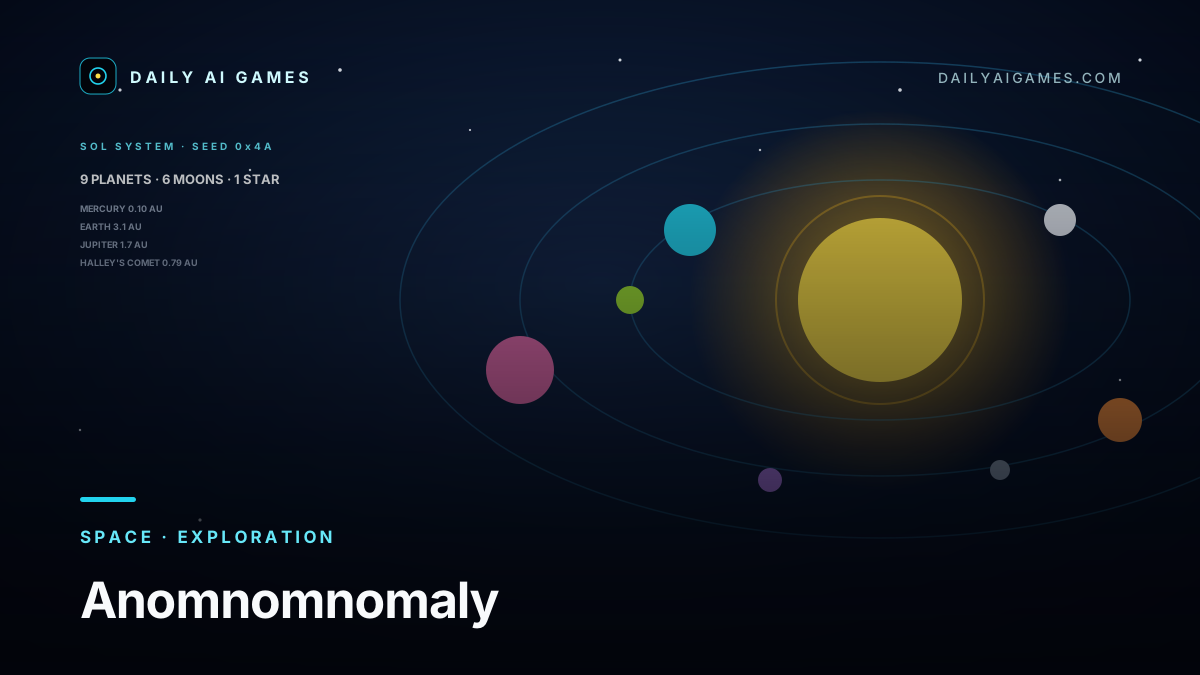
Anomnomnomaly
A seamless browser space sim: fly a solar system of nine planets and six moons with no loading screens, installable as a PWA, built solo with AI help on the server.
Play now
Articles About Heartwood
Oct 24, 2026
Heartwood: 269 Sections, Seven Endings, and 5,000 Robot Playtests
Heartwood is a sci-fi horror gamebook built with Claude Code and tested by 5,000 simulated runs. What its QA loop teaches about branching games.
Oct 19, 2026
AI-Generated Browser Games Worth Knowing: October–November 2026
From a 12-hour sports hit and a weekend MMO to fifteen new browser games — a tin-toy kart racer, a spherical sailing sim, an art-print surf run and more.
Sep 28, 2026
What Are AI Generated Games? A Plain-English Guide
AI generated games are playable games built by AI models from text prompts. Here is what they are, how they are made, and where to play them free.
