Anomnomnomaly
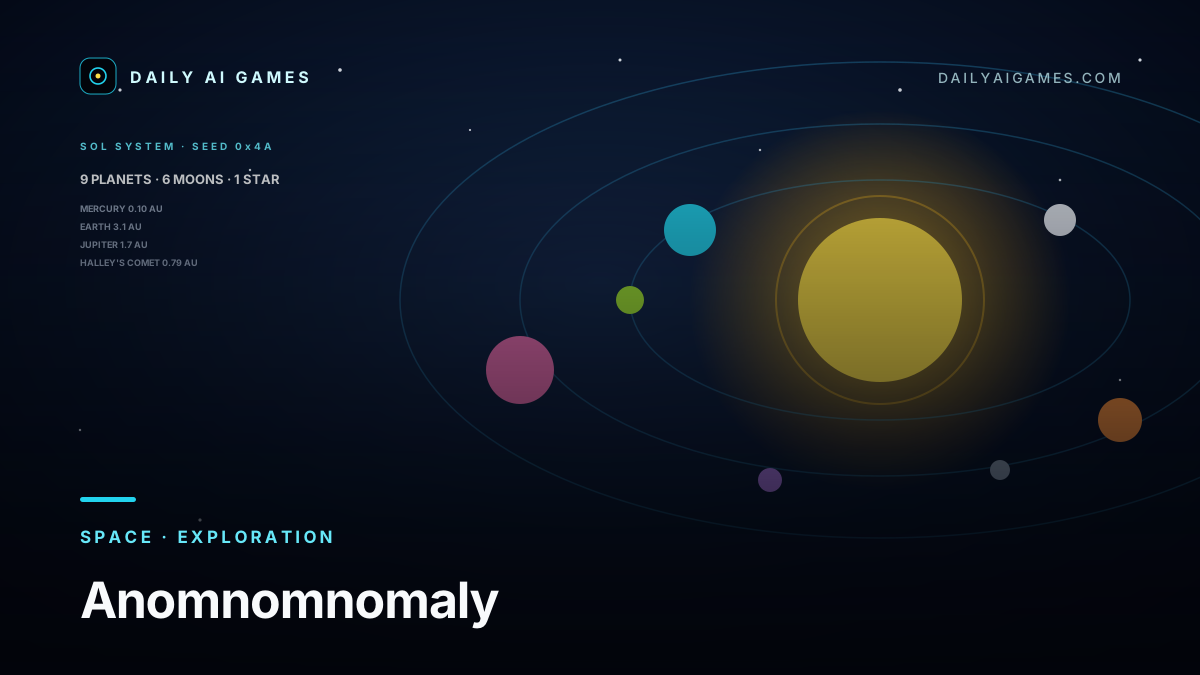
A seamless browser space sim: fly a solar system of nine planets and six moons with no loading screens, installable as a PWA, built solo with AI help on the server.
512 plays tracked on Daily AI Games
External game siteAnomnomnomaly is not hosted on Daily AI Games. The button above opens an independently operated, free browser game on anomnomnomaly.com; its content, availability and controls are controlled by that site.
How to Play
Desktop: WASD or hold the mouse to fly, Space to boost, right-drag or Q/E to turn, scroll to zoom, hold S to descend from orbit and C for your hold. Touch: hold to fly, second finger to boost. The game is installable as a PWA; only system exploration works offline.
These are the controls for Anomnomnomaly. The external Anomnomnomaly version on anomnomnomaly.com may use slightly different controls.
Game Preview
About Anomnomnomaly
Anomnomnomaly is a browser space-exploration sim built around one promise: no loading screens. You fly a compressed solar system — one star, nine planets and six moons — and can move from orbit toward a surface without a cut, a level load or a progress bar. The scale is real enough to feel vast and faked at render time so the trip stays playable, which is the same trick every seamless space game uses and the hardest one to get right in a tab.
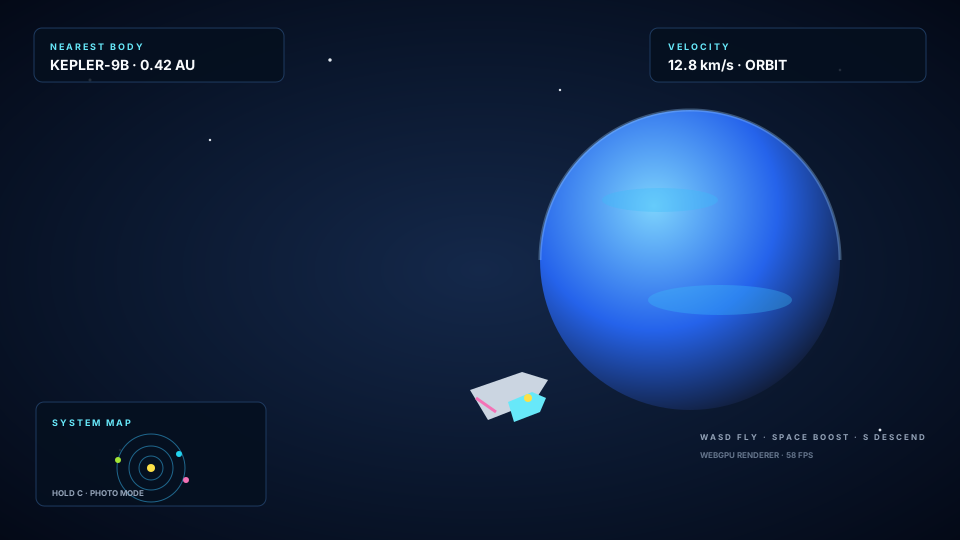
The flight model is deliberately hands-on. WASD or holding the mouse flies, Space boosts, right-drag or Q/E turns, the scroll wheel zooms, holding S descends from orbit, and C opens your hold. On a touch screen you hold to fly and use a second finger to boost. The HUD keeps the essentials close: which body you are near, distance in astronomical units, speed and a system map. There is a photo mode for people who would rather look than fly, and the whole thing installs as a PWA so it opens like an app and still lets you explore the system offline.
The visual identity comes from pixel-art planets and a restrained HUD rather than from photoreal assets. The planets are procedurally generated from seeds, the ships come from artists on itch.io, and the soundtrack is licensed from musicians rather than generated. Under the hood the renderer prefers WebGPU and falls back to WebGL, which is why the page recommends a recent Chrome, Edge, Firefox or Safari. A multiplayer server is part of the project, but it is explicitly beta: accounts and whatever they hold may be reset while the work stabilises.
The build story is a useful corrective to “AI made this game” headlines. Anomnomnomaly is a solo project by ofhope, who used Claude Code mainly as an aid on the multiplayer server and other fiddly infrastructure — not to generate the worlds, ships or music. The procedural planet work builds on Deep-Fold’s PixelPlanets, the developer’s own universe-generation tooling is intended for an MIT release, and the credits page lists every asset source. It is early and changing quickly, it works best on desktop, and it is not finished. What it does show is the more realistic version of AI-assisted game development: a human with a strong visual direction and a hard engineering problem, using an AI coding tool to get past the server work that would otherwise eat the project.
How This Game Was Generated
A solo project by ofhope. Claude Code was used mainly as an aid on the multiplayer server and other infrastructure work; the procedurally generated worlds are not AI-generated and build on Deep-Fold’s PixelPlanets, with ships and music sourced from artists. Universe-generation tooling is planned for an MIT release, and all asset credits are listed on the game’s credits page.
The Prompt Behind This Game
Show the prompt used to generate Anomnomnomaly
Build a seamless browser space-exploration game as ONE self-contained HTML file plus a tiny optional server (inline assets, no game libraries).

World and flight:
- A compressed solar system: one star, at least nine planets and six moons, with real relative scale faked at render time so the player can fly between them without loading screens.
- Seamless transition from orbit to surface approach: no level loads, no cuts. Use floating origin or camera-relative rendering to avoid float precision jitter.
- Flight model: WASD or hold-to-fly, Space to boost, right-drag or Q/E to turn, scroll to zoom, hold S to descend from orbit. Touch equivalent: hold to fly, second finger to boost.
- Planets are procedurally generated from a seed using pixel-art textures generated at runtime from code; no external image files.
Rendering and performance:
- Prefer WebGPU with a WebGL fallback. Target 60fps on a mid-range laptop and 30fps on a recent phone.
- Budget draw calls and texture memory explicitly; print a performance budget table in the README.
- Include a photo mode that pauses input and hides the HUD.
Persistence and multiplayer:
- Make it installable as a PWA with an offline mode that still allows system exploration.
- Optional multiplayer: an authoritative server holds shared world state, clients send position/actions at a low tick rate. If the server is unavailable, fall back to solo play without an error wall.
- Accounts and saved state are explicitly resettable during beta; show that warning in the UI.
UI:
- A HUD with current body, distance in AU, speed, and a system map. Minimal text, no external fonts.
- Keyboard/mouse on desktop, touch controls on mobile, both reachable one-handed.
After the code, print the scene graph (star, planets, moons), the LOD strategy, and the three biggest performance risks.
Open in the prompt library for tips and variations
Similar AI Games
 Casual Games
▶ 605 plays
Nomae Craft
A browser voxel sandbox with one shared persistent world: 14 biomes, survival, crafting, mobs and floating sky islands, all generated in code.
Play now
 Casual Games
▶ 40 plays
MONA LISA: Fly Behind the Painting
A no-fail 3D flight through Leonardo da Vinci's notebook: bring ink drawings back to life, build his machines and fly out the back of the Mona Lisa.
Play now
 Action Games
▶ 752 plays
CINDERDEEP: Falling Sand Roguelike
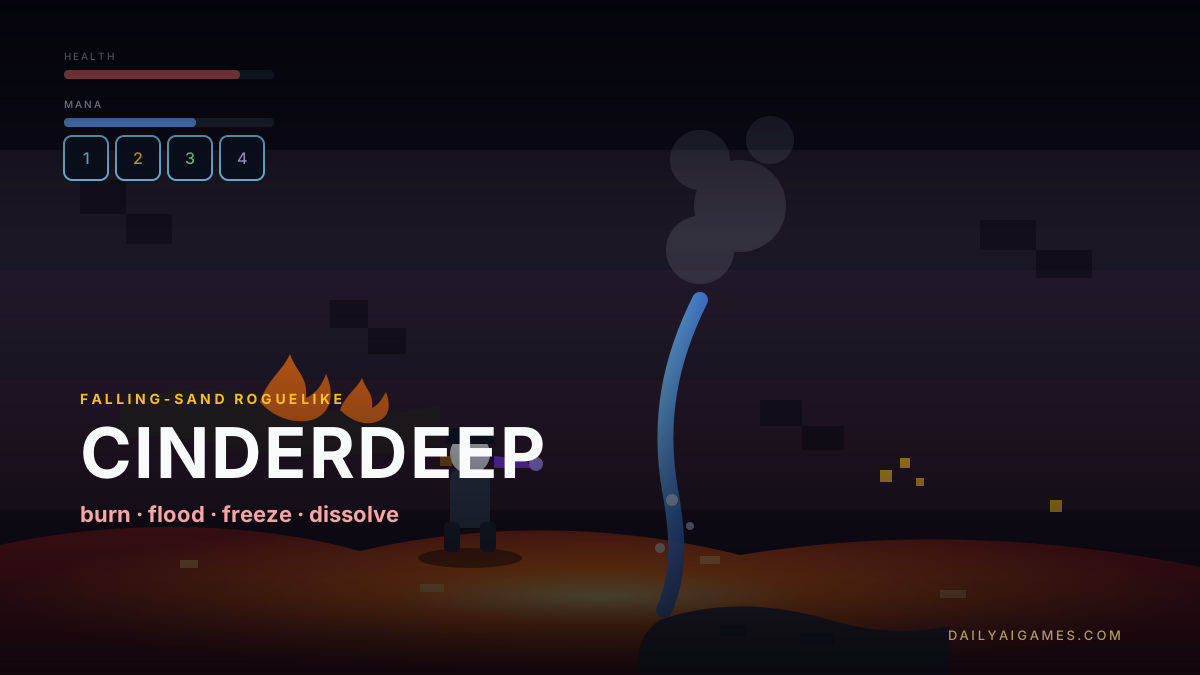
A falling-sand roguelike where every pixel of the cave is simulated. Burn, freeze, dissolve and flood your way through five depths with a four-spell wand.
Play now
 Casual Games
▶ 476 plays
Heartwood
A sci-fi horror gamebook with 269 numbered sections, seven endings and a squad that remembers how you treated them — built with AI and tested by 5,000 simulated runs.
Play now
Articles About Anomnomnomaly
Oct 24, 2026
Anomnomnomaly Is a Seamless Space Sim That Fits in a Browser Tab
A solo-built space sim with no loading screens, WebGPU rendering and an AI-assisted multiplayer server. What is real, what is beta, and why it matters.
Oct 19, 2026
AI-Generated Browser Games Worth Knowing: October–November 2026
From a 12-hour sports hit and a weekend MMO to fifteen new browser games — a tin-toy kart racer, a spherical sailing sim, an art-print surf run and more.
Oct 16, 2026
How to Publish an AI Game Online: Free Hosting Guide
How to publish an AI game online for free: hosting on Cloudflare Pages, itch.io, GitHub Pages and Netlify, plus a quick SEO checklist for game pages.
