Space games promise scale and then break the promise with a loading screen. Anomnomnomaly makes the opposite promise: you can fly from orbit toward a surface without a cut, a level load or a progress bar. In a browser tab.
It is early, it is changing quickly, and it is explicitly a work in progress. It is also one of the clearest examples this month of what AI-assisted development looks like when it is used on the hard infrastructure rather than on the art.
What you can do
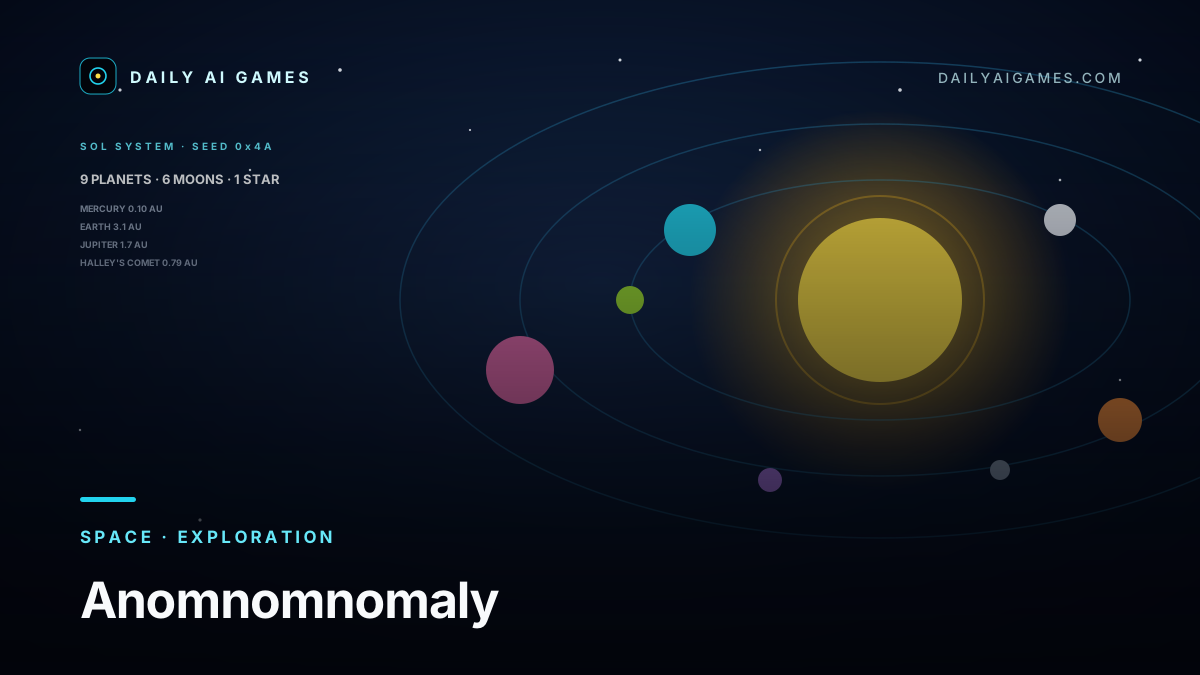
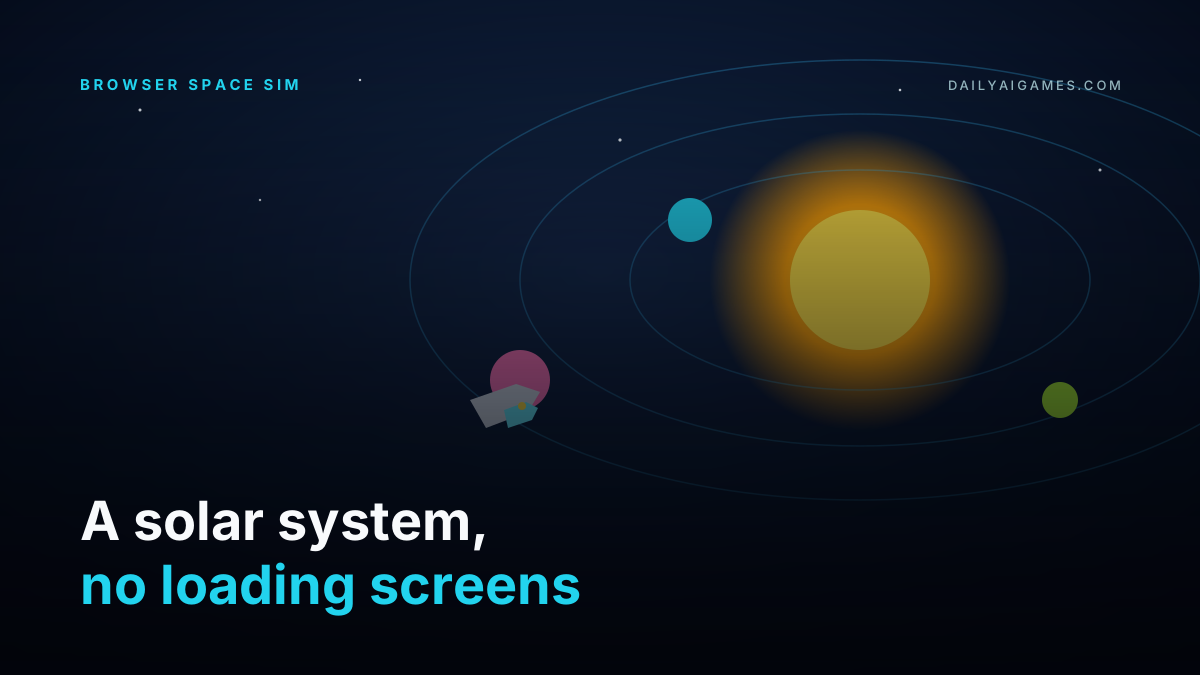
Anomnomnomaly is a compressed solar system: one star, nine planets and six moons. The scale is real enough to feel vast and faked at render time so the trip stays playable — the same trick every seamless space game uses, and the hardest one to get right in JavaScript.
The flight model is hands-on rather than menu-driven:
- Desktop: WASD or hold the mouse to fly, Space to boost, right-drag or Q/E to turn, scroll to zoom, hold S to descend from orbit, C for your hold.
- Touch: hold to fly, second finger to boost.
- HUD: the nearest body, distance in astronomical units, velocity, and a system map.
- Photo mode pauses input and hides the interface for people who would rather look than fly.
The planets are procedurally generated from seeds, the ships come from artists on itch.io, and the soundtrack is licensed from musicians rather than generated. The whole thing installs as a PWA, and an offline mode still lets you explore the system without a connection.
The engineering promise
Seamless flight is a rendering problem before it is a design problem. The game prefers WebGPU and falls back to WebGL, which is why it recommends a recent Chrome, Edge, Firefox or Safari. Moving between orbit and a surface without a load requires careful level-of-detail work, camera-relative rendering and a way to avoid floating-point jitter at large distances.
That is the kind of work an AI coding assistant is genuinely useful for. Not because it can invent the visual direction, but because it can help write the multiplayer server, the state sync and the fiddly glue that would otherwise consume a solo developer’s entire budget.
How AI was actually used
This is where Anomnomnomaly is more honest than most “AI game” coverage. The developer, ofhope, says Claude Code was used mainly as an aid on the multiplayer server and other infrastructure tasks. The procedurally generated worlds are not AI-generated; they build on Deep-Fold’s PixelPlanets. The ships and music come from artists. The universe-generation tooling is intended for an MIT release, and the credits page lists every asset source.
In other words: a human with a strong visual direction and a hard engineering problem used an AI tool to get past the part that would have killed the project. That is the realistic version of AI-assisted game development, and it is more useful to study than a demo that claims a model made everything.
The new seamless space sim prompt follows the same structure: build the flight and one planet first, keep multiplayer optional, and treat offline mode as the fallback rather than an afterthought.
What is beta about it
Anomnomnomaly is not finished, and the site says so. Accounts and whatever they hold may be reset while the multiplayer work stabilises. The itch.io listing notes that the client falls out of sync with the server regularly, which is why it is not yet uploaded there. It works best on desktop with a recent browser, and there is still a lot of content and art needed to bring the game to life.
None of that is hidden. The developer is treating the release as a public beta and asking for specific feedback: what you find, what confuses you, what you want next. That is the correct way to ship something this ambitious solo.
Why it matters
Browser space sims are a genre where the technical bar is high and the audience is small. Most projects die in the gap between the first beautiful screenshot and a playable loop. Anomnomnomaly is interesting because it is attacking the gap directly: seamless flight first, shared world second, content third.
It also makes a useful counterpoint to the louder AI game stories. A model did not generate this solar system. A person built a solar system and used a model to help with the server. The distinction is not semantic — it changes what the game can be, who owns it, and whether it can improve without regenerating everything.
Verdict
If you want a polished space game today, wait. If you want to watch a solo developer build one in public — and see where AI assistance actually pays off — open it in a recent desktop browser, fly for ten minutes, and read the credits. The ambition is real, the seams are visible, and that is exactly why it is worth following.