Most games based on paintings treat the artwork as wallpaper. They put a famous image behind a platformer and call it a theme. GREAT WAVE: Surf The Great Wave off Kanagawa does something more interesting: it treats the print as a place you enter, and then it makes the water inside the print behave like water.
At the time of writing the game had 100 plays and 1 hour 39 minutes of tracked play on AIGameShare, with an average session of about one minute. That average is not a warning. It is the shape of the design. GREAT WAVE is a one-more-run arcade game, and almost everything in it is built to get you back onto the wave in under two seconds.
The opening is a gallery, not a menu
The first thing you see is a framed print on a gallery wall. Then the camera dives through the glass. The transition lasts a few seconds, and it does more work than a tutorial: it tells you that the rules of the museum are over, and that the rules of the sea are about to start.
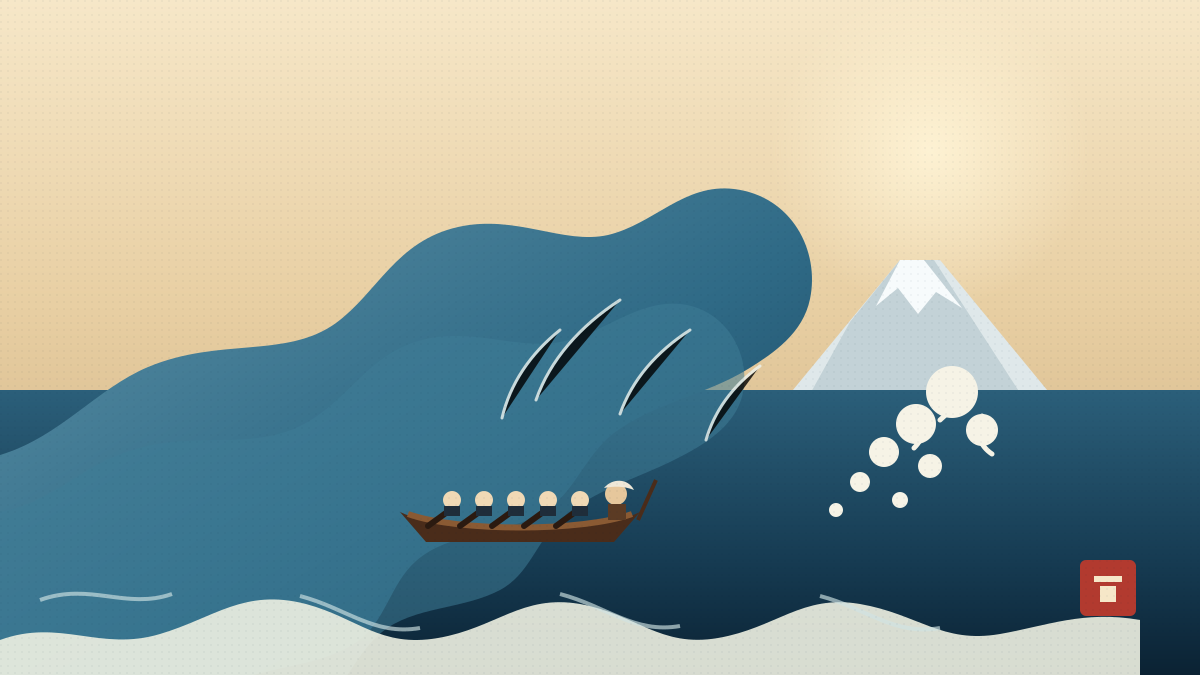
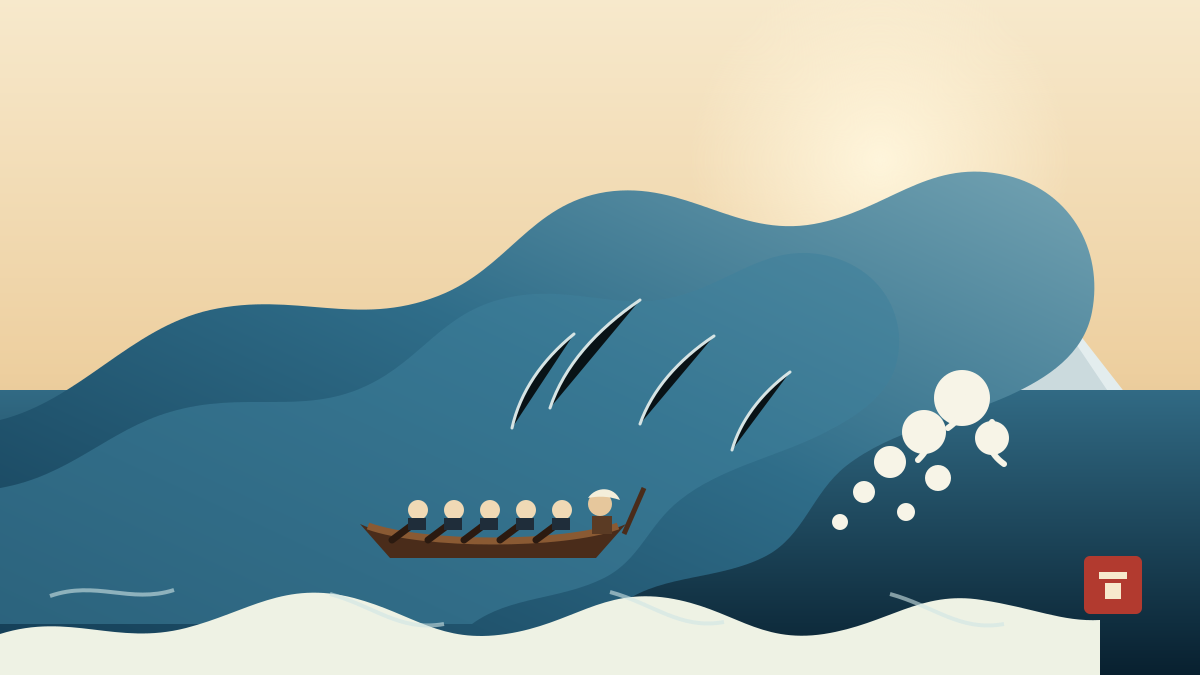
You arrive in the stern of an eight-oared boat with an old painter behind you. The wave fills the frame. Mount Fuji is a small triangle in the distance, visible enough to be a destination and far enough to be a joke. That composition is the whole game in one image: a tiny boat, an enormous wave, and a mountain that says not yet.
Spray is the scoring line
GREAT WAVE does not score distance. It scores line.
White spray runs down the face of the wave, and staying with it holds your speed and raises a multiplier. Drift away and the run starts to bleed out. This turns the wave into a readable course without adding gates, rings or arrows. The spray is part of the art, so the scoring system looks like weather instead of UI.
The rest of the loop supports that idea. You carve with the arrow keys or A/D. You row with Up or W when the wind drops. Space leaps off the swell, which is how you cross broken water and bank airtime. And when the foam behind the boat starts to collapse, holding row is the only thing that keeps you ahead of it. That last rule is the smartest one in the build: rowing and carving compete for the same attention, so every second is a small decision about speed versus line.
The first two waves cannot kill you. That is a deliberate piece of onboarding. You learn what spray does, how the boat turns and what the foam looks like before the game starts charging for mistakes.
Eight waves, four gods, one mountain
The run is eight waves long. Each wave changes the shape of the water and the rhythm of the hazards, and the later ones are guarded by named gods: Fujin for wind, Raijin for thunder, Umibozu for the sea and the dragon Ryujin. Crucially, they do not spawn as enemies to shoot. They change the water — gusts, cross-swells, whirlpools, lightning sets — so the skill ceiling stays about route-reading under pressure.
Seven treasures are hidden across the eight waves. They are collectible without stopping, which means they are a routing problem rather than a checklist. And the mountain stays visible the whole time. Almost nobody reaches it, but everyone can see how far they got, which is exactly what an arcade game with a summit should do.
What AI got right, and where it is thin
GREAT WAVE was created by nilni and built with Claude Fable 5.2 and Claude Code. The impressive part is not the print itself — reproducing a famous image is the easy half. It is that the art direction and the mechanics agree. The spray is both decoration and score. The foam is both texture and timer. The gods are both mythology and hazard design. That is a coherent piece of game design, not a rendering demo.
The limits are real too. One minute is a short average, and some of that is people bouncing off the difficulty rather than savoring it. The boat’s handling takes a few runs to trust, and the leap can feel like a commitment when the camera is low. The leaderboard is not populated yet, so the competition is currently you against the wave.
None of that changes the core. This is a game with a strong, specific idea — enter the print, ride the print — and it executes that idea with a scoring system that fits the art.
What to copy if you build one
Our art-print surf game prompt is the reusable version of this build. The decisions worth stealing:
- Make the art the level design. If the wave shape does not change how you carve, the theme is only a skin.
- Use a visual element as the scoring line. Spray is legible because it belongs in the picture.
- Protect the first two waves. A short safe opening teaches the verb without a tutorial pop-up.
- Make rowing a trade-off. If holding row is always correct, carving stops being a decision.
- Show the summit. A visible mountain turns a score into a journey.
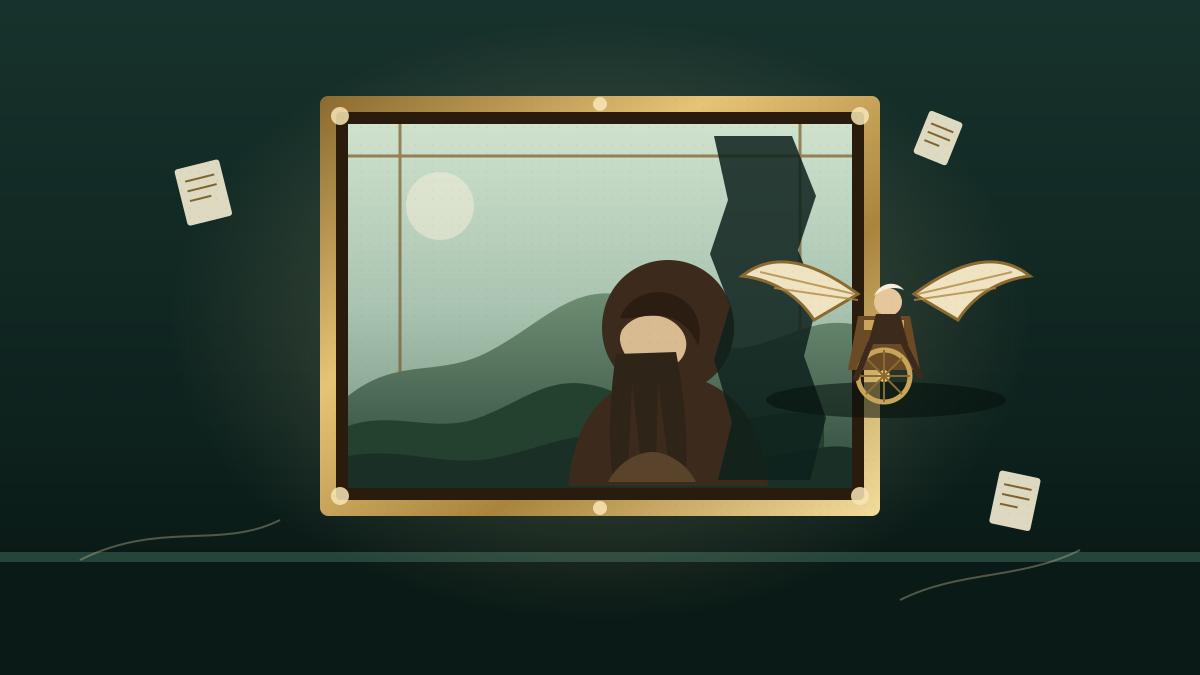
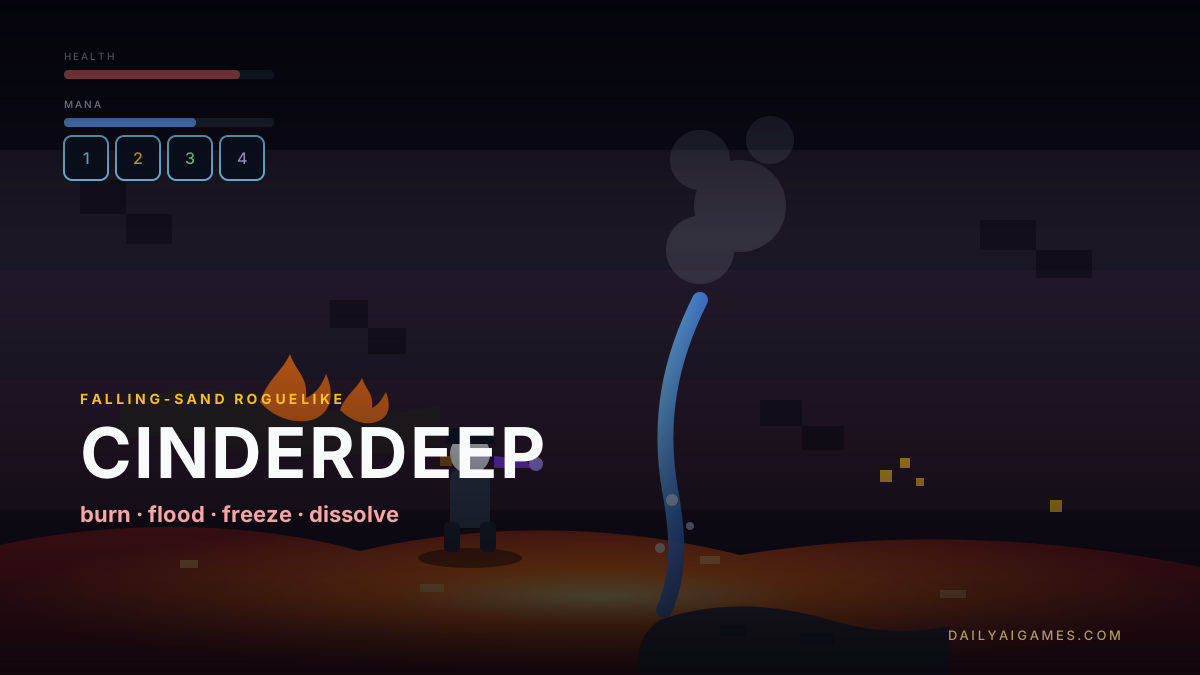
If you like games that turn a single image into a system, MONA LISA: Fly Behind the Painting does it with Leonardo’s notebook and a no-fail flight model, while CINDERDEEP does it with falling sand and a wand that injects real material into a cave.
Verdict
GREAT WAVE is the best art-history arcade game I have played in a browser. The frame-dive is a great opening, the spray line is a great scoring idea, and the foam chase gives the whole run a pulse. It is short, it is hard, and it understands that a famous painting is not a backdrop — it is a level.